


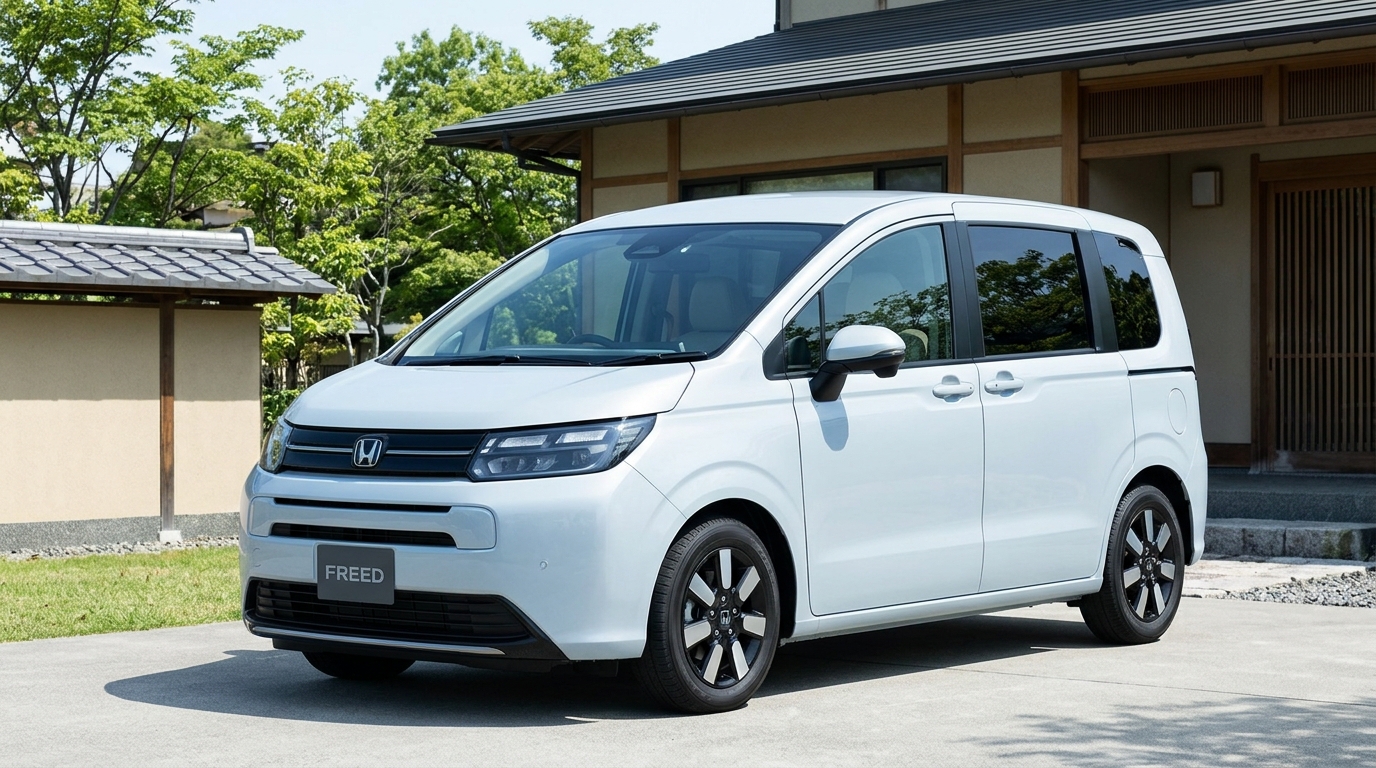
The Honda Freed is a compact seven-seater that makes a strong case for buyers who need more space than a conventional hatchback but do not want a large, fuel-hungry family van. In Kenya, where the Toyota Sienta is a familiar choice among families, small businesses and ride-hailing operators, the Freed offers a similar formula with a few differences worth considering.
Both vehicles prioritise practicality over appearance. They have compact dimensions, sliding rear doors and flexible seating, making them easier to use in crowded parking spaces and busy urban neighbourhoods than many larger people carriers.
Space and everyday practicality
The Freed’s biggest selling point is its use of interior space. Its relatively tall body provides good headroom, while the sliding doors make it easier for passengers to get in and out in tight parking spaces. This is particularly useful when carrying children, older passengers or several people at once.
Depending on the generation and specification, the Freed comes with different seating configurations, including six- and seven-seat versions. Buyers should confirm the actual layout of an imported unit rather than assume every Freed has seven seats.
The third row is useful for children and shorter journeys, although adults may find it restrictive on longer trips. With all seats occupied, luggage space is limited. Folding the rear seats creates more room for shopping, work equipment or travel bags.
Engine and fuel consumption
Many used Honda Freed models imported into Kenya have small petrol engines, with engine options varying by generation. Newer versions also include hybrid variants, so buyers should check the exact powertrain before comparing fuel economy or maintenance costs.
The petrol versions are designed for everyday driving rather than high performance. They are suitable for urban errands, school runs and routine family travel, while their compact size makes them less intimidating to drive than larger vans.
Fuel consumption depends on the engine, transmission, traffic conditions, vehicle condition and driving style. Nairobi’s stop-start traffic can increase consumption, so buyers should not rely entirely on advertised or overseas fuel-economy figures.
What about maintenance in Kenya?
The Honda Freed is not an inherently difficult vehicle to own, but its ownership costs depend heavily on the particular model and the support available for it. Toyota models generally benefit from broad familiarity among Kenyan mechanics and a well-established parts market. The Freed may require more careful sourcing for certain components, particularly for less common specifications.
Before buying, check the transmission operation, engine performance, suspension, air conditioning and electronic systems. If you are considering a hybrid, have the hybrid system and battery assessed by a technician familiar with the model. Do not assume that every warning light or unusual transmission behaviour is a minor issue.
Also check the vehicle’s import and service history where available. A clean-looking interior and fresh paint cannot tell you how well the engine, gearbox or hybrid system has been maintained.
Is the Honda Freed worth buying in Kenya?
The Honda Freed is a practical option for families who need flexible seating, sliding doors and manageable exterior dimensions. It can also suit small operators who need a compact people carrier, provided the seating, luggage requirements and running costs match the intended use.
Its main challenge against the Sienta is not practicality but the ownership ecosystem. Buyers should establish parts availability and service support for the exact model before committing.
If you find a clean Freed with a sound mechanical history, it deserves a place on your shortlist. The smartest purchase is the vehicle that fits your needs and budget without leaving you with avoidable repair bills.