

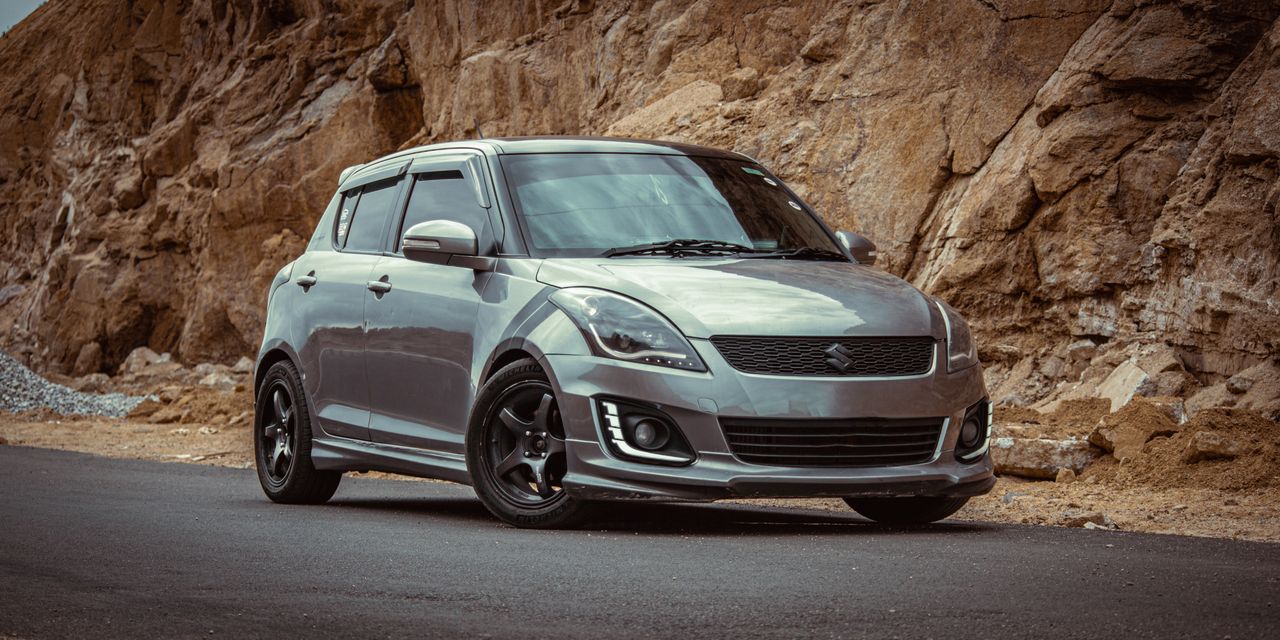
The Suzuki Swift is becoming a familiar sight on Kenyan roads, and it is easy to understand why. It has the compact size people want for everyday driving, a youthful design and a reputation for good fuel economy. For buyers who want an alternative to the Toyota Vitz or Mazda Demio, the Swift makes a convincing case for itself.
But is it a good car to live with in Kenya, particularly when you consider our traffic, speed bumps, rough roads and the cost of maintaining a used import?
A small car with plenty of character
The Swift looks sportier than many cars in its class. Its compact body, distinctive front end and relatively wide stance give it a purposeful appearance without making it unnecessarily large. It is also easy to manoeuvre and park, which is a genuine advantage in crowded estates and busy Nairobi streets.
The 2017-and-newer generation is particularly appealing because Suzuki used its lightweight HEARTECT platform to improve efficiency and handling. The car feels light on its feet, and the steering makes it easy to navigate tight spaces. On a good road, it can also be surprisingly enjoyable to drive.
Inside, the Swift is practical rather than luxurious. The front seats offer reasonable comfort, the controls are straightforward, and higher-specification versions may include features such as steering-wheel controls, a reversing camera and touchscreen infotainment.
Rear-seat space is adequate for a small hatchback, although taller passengers may find it less ideal on longer journeys. The boot is also modest, so families who regularly travel with substantial luggage may want something larger.
How does it perform, and is it economical?
Many Swift imports familiar to Kenyan buyers use a 1.2-litre petrol engine. Depending on the year and market, buyers may encounter conventional petrol versions as well as mild-hybrid models. The 1.2-litre engine is designed for efficiency rather than outright power, but the Swift’s relatively low weight helps it feel responsive during normal driving.
For commuting, shopping and occasional highway trips, it has enough performance for most everyday needs. However, when carrying several passengers, climbing steep hills or overtaking at highway speeds, you need to plan your moves rather than expect strong acceleration.
Fuel economy is one of its biggest attractions. The exact figures depend on the engine, transmission, condition and driving environment, but a well-maintained 1.2-litre Swift can be economical to run. Mild-hybrid versions can offer additional efficiency benefits, although they should not be confused with full hybrids such as the Toyota Aqua.
In Nairobi traffic, driving style, idling and the condition of the engine can make a noticeable difference to consumption. It is therefore better to judge an individual car’s likely running costs realistically than to rely on impressive figures quoted in advertisements.
What about Kenyan roads and maintenance?
The Swift’s biggest practical limitation is ground clearance. Like many small cars, it can struggle with tall speed bumps, deep potholes and badly damaged roads, particularly when carrying passengers or luggage. Approach obstacles carefully, and inspect the underside before buying a used example. A car fitted with unusually large wheels or suspension modifications may also behave differently from the original specification.
Maintenance should not be a major concern when the vehicle has been properly cared for, but buyers should not assume every Swift is automatically cheap to maintain. Service records matter, and automatic versions need particular attention to the correct transmission-fluid specification and service history. Suspension components also deserve inspection if the car has spent considerable time on rough roads.
Parts and servicing support are available in Kenya, including through Suzuki’s authorised service network, but availability and cost can vary depending on the component and model year. Before buying an older import, establish whether the parts you may need are readily available locally.
Should you buy the Suzuki Swift? The Swift makes sense for someone who wants an economical, easy-to-drive hatchback for commuting, errands and everyday use. It offers character without requiring a large engine, and it is a worthwhile alternative for buyers who do not want to follow the usual Toyota Vitz route.
It is less suitable if you regularly travel on rough rural roads, need generous boot space or frequently carry several adults. In those situations, a larger or higher-riding vehicle may be more practical. The Suzuki Swift is worth considering if you want a small, economical car that is enjoyable to drive. Just make sure its limited ground clearance and cabin space suit your daily routine.