

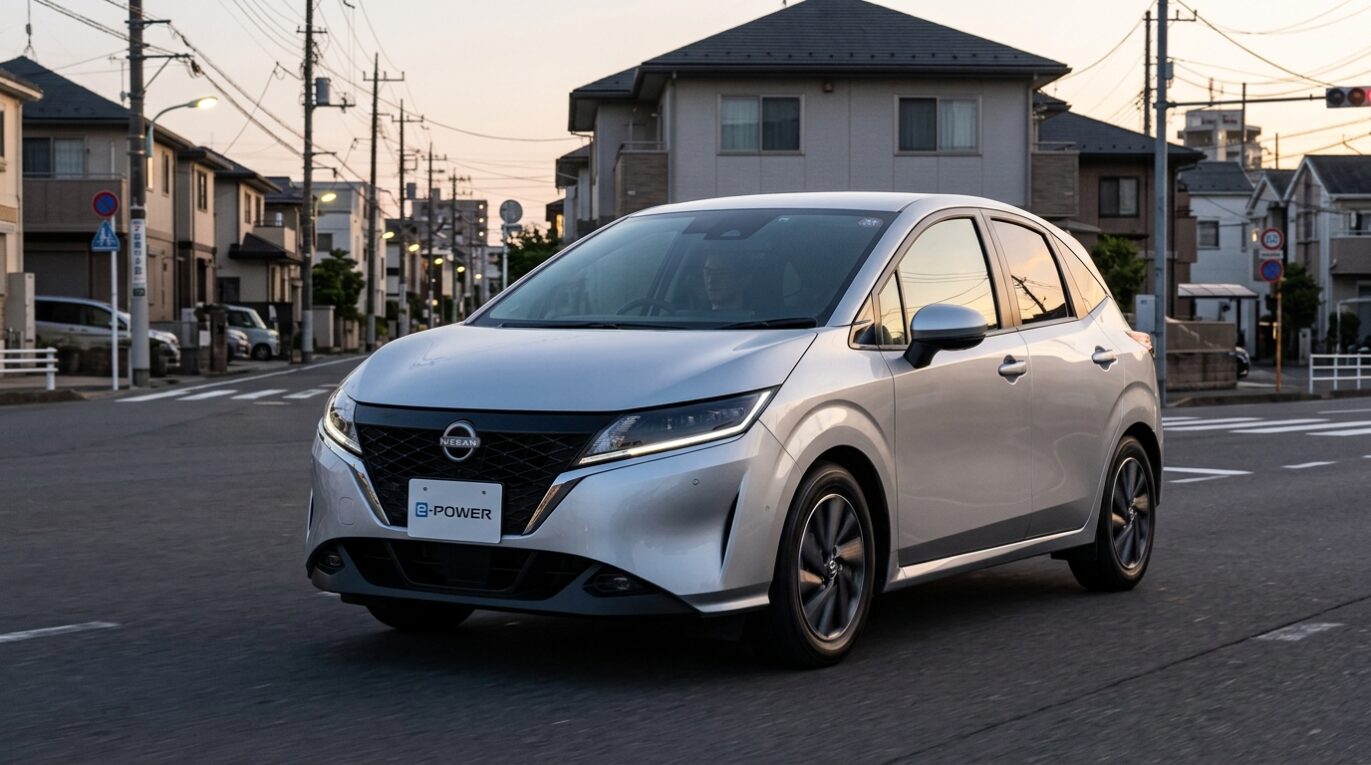
The Nissan Note has quietly become one of the most common hatchbacks on Kenyan roads. It is easy to understand why. It is compact enough for city driving, practical enough for everyday use, and generally affordable to own. In recent years, however, a different version has been attracting even more attention, the Nissan Note e-Power.
At first glance, it looks almost identical to a regular Nissan Note. The difference lies beneath the bodywork. The e-Power uses a unique hybrid system that offers a driving experience unlike most hybrids found in Kenya. That has made many buyers curious, but it has also raised questions. Is it reliable? Does it really save fuel? Is it expensive to maintain? And perhaps most importantly, is it worth buying over a Toyota hybrid? If you’re considering one, here is what you should know before making a decision.
What Is the Nissan Note e-Power?
Unlike a conventional hybrid, the Nissan Note e-Power is driven entirely by an electric motor. The petrol engine does not directly power the wheels. Instead, it works as a generator, producing electricity that either drives the electric motor or charges the battery.
That may sound complicated, but the result is surprisingly simple. The car accelerates smoothly and quietly, much like a fully electric vehicle, without requiring charging stations or plugging into the grid. You simply fill it with petrol and drive as you would any other car.
For many buyers, this is the biggest attraction of the e-Power system. It offers much of the smoothness associated with electric vehicles while avoiding the charging challenges that still exist in Kenya.
How Fuel Efficient Is It?
Fuel economy is one of the biggest reasons buyers choose the Note e-Power. In urban traffic, where frequent stopping and starting usually increase fuel consumption, the e-Power performs particularly well. The electric motor handles most of the driving while the petrol engine runs only when needed to generate electricity.
Many Kenyan owners report impressive fuel savings during daily commuting compared to conventional petrol hatchbacks of a similar size. Actual consumption will always depend on driving style, traffic conditions, and maintenance, but if reducing fuel expenses is your priority, the Note e-Power deserves serious consideration.
What Is It Like to Drive?
One of the first things drivers notice is how refined the car feels. Acceleration is immediate because the electric motor delivers power instantly. There is no waiting for gears to change or the engine to build revs. In city traffic, the car feels responsive and relaxed, making daily commuting less tiring.
The compact dimensions also make parking easier in crowded towns and shopping centres, while the suspension provides a comfortable ride for most urban roads. Although the Note e-Power can comfortably handle highway journeys, it is designed primarily as a city car rather than a long-distance cruiser.
Is It Reliable?
Reliability is where many buyers become cautious, largely because the technology is still relatively unfamiliar. Fortunately, the e-Power system has generally built a positive reputation internationally. The petrol engine spends much of its life operating at efficient speeds instead of constantly responding to acceleration demands, which can reduce wear under normal driving conditions.
Like any hybrid, however, regular servicing remains essential. Buyers should also ensure that the vehicle has been properly maintained before import or purchase. When buying a used unit, it is wise to have the hybrid system inspected by a technician familiar with Nissan hybrids rather than relying solely on a standard pre-purchase inspection.
What About Maintenance and Spare Parts?
This is one area where buyers should do their homework. Routine maintenance is straightforward, but some hybrid-specific components may not be as readily available as those for long-established Toyota hybrids. Fortunately, the growing number of Note e-Power vehicles entering Kenya has encouraged more workshops to invest in the necessary diagnostic equipment and technical expertise.
Availability of spare parts has also improved in recent years, although buyers in smaller towns may still have fewer options than those living in Nairobi or other major urban centres. Before purchasing any hybrid, it is worth confirming where it can be serviced and whether genuine parts are easily available in your area.
How Does It Compare With the Toyota Aqua?
This is probably the comparison most Kenyan buyers make. The Toyota Aqua remains one of the country’s most trusted hybrid hatchbacks thanks to its proven reliability, excellent resale value, and widespread availability of spare parts.
The Nissan Note e-Power, however, offers a noticeably different driving experience. Its electric motor delivers smoother acceleration, and many drivers appreciate the quieter cabin, especially in stop-and-go traffic.
Choosing between the two often comes down to priorities. Buyers who place the highest value on resale and an established service network may lean towards the Aqua, while those looking for a more refined driving experience may find the Note e-Power more appealing. Neither is automatically the better choice. Each excels in different areas.
Who Should Buy the Nissan Note e-Power?
The Note e-Power makes the most sense for drivers who spend much of their time in urban traffic and want to reduce fuel costs without moving to a fully electric vehicle.
It also suits first-time car buyers, young professionals, and small families looking for a practical hatchback with modern technology and comfortable everyday performance.
Drivers who frequently travel on rough rural roads or regularly carry heavy loads may be better served by a larger crossover or SUV.
Is the Nissan Note e-Power Worth Buying?
The Nissan Note e-Power represents a different way of thinking about hybrid technology, and that is exactly what makes it interesting.
It combines the smooth driving characteristics of an electric vehicle with the convenience of a petrol-powered car, creating a package that feels modern without demanding major lifestyle changes. While Toyota hybrids still enjoy advantages in resale value and aftermarket support, the gap is gradually narrowing as more e-Power models enter the Kenyan market.
For buyers whose priorities are fuel economy, city comfort, and everyday practicality, the Nissan Note e-Power deserves a place on the shortlist.
If you’re still comparing options, you may also find these guides helpful: Toyota Fielder Hybrid Review for Kenyan Buyers where we look at a closer look at one of Kenya’s most trusted hybrid wagons and why it continues to attract families and businesses alike. Best Family Cars in Kenya for Long-Distance Travel where you will find our recommendations for comfortable and dependable family vehicles suited to Kenyan roads.
At Iko Gari, we believe buying a car should be based on facts, not assumptions. That’s why we continue to publish practical, independent guides that help Kenyan motorists understand what it’s really like to own, maintain, and live with the vehicles they’re considering. Whether you’re buying your first car or upgrading to something new, our goal is simple: help you know more so you can buy better.