

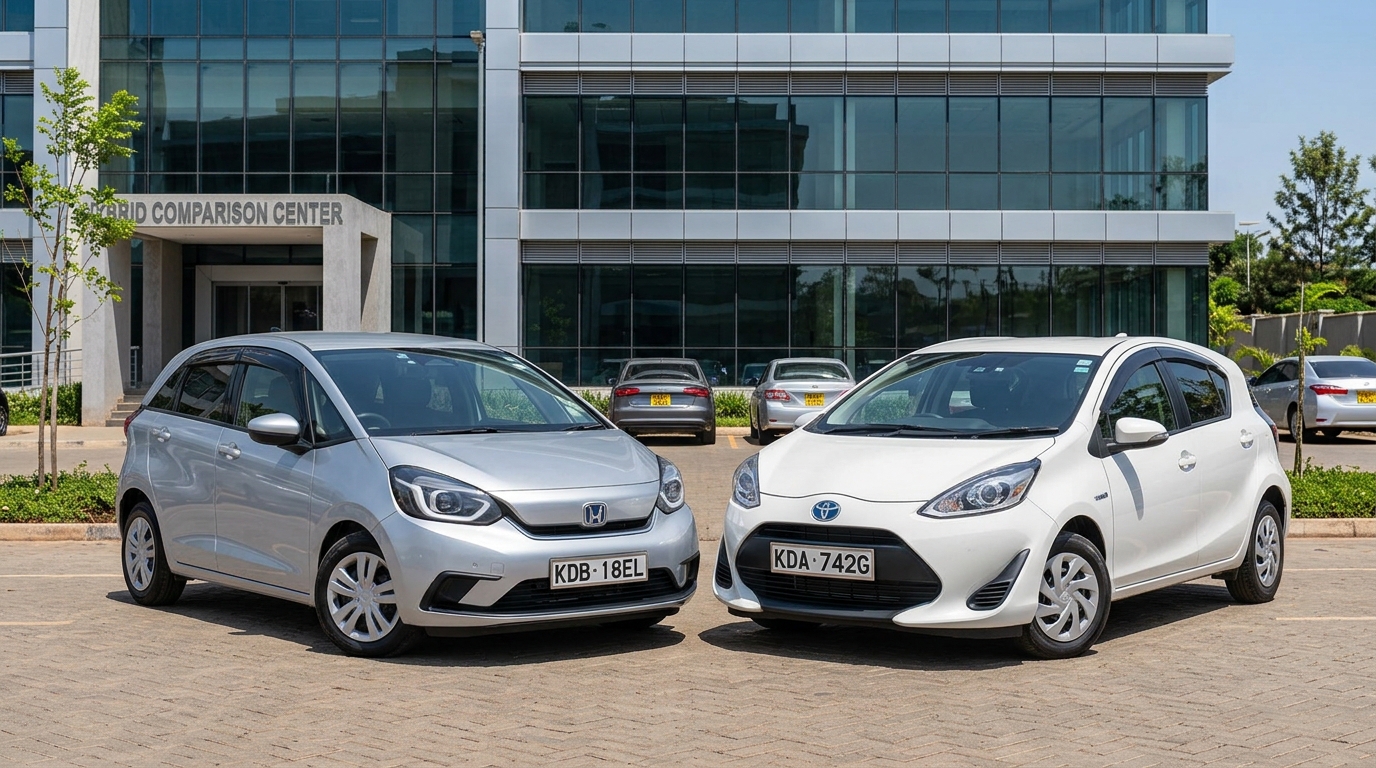
If you want to save on fuel without buying a fully electric car, the Toyota Aqua and Honda Fit Hybrid are two options worth considering in Kenya. Both are compact, economical Japanese imports suited to everyday driving, but they appeal to slightly different buyers.
The Aqua has built a strong reputation for fuel efficiency, while the Fit Hybrid offers a more versatile cabin and practical seating arrangements. The difference becomes clearer when you look beyond fuel consumption and consider space, maintenance and the condition of the particular car.
Fuel economy and performance
The Toyota Aqua uses a 1.5-litre petrol engine paired with Toyota’s hybrid system. In the commonly encountered first-generation Aqua, the system is designed to maximise efficiency, particularly in stop-start driving. The car is light, compact and well suited to daily commuting.
The Honda Fit Hybrid also uses a 1.5-litre engine in many versions, but buyers need to pay attention to the generation. The second-generation Fit Hybrid introduced a seven-speed dual-clutch i-DCD system, while the fourth-generation model, launched in 2020, adopted Honda’s two-motor e system. These are different powertrains, so they should not be treated as mechanically identical.
Both can deliver good fuel economy, but actual consumption depends on traffic, driving style, vehicle condition and the specific hybrid system. The Aqua is a particularly sensible choice for someone whose priority is economical daily commuting. The Fit offers efficiency too, while giving buyers a more spacious and flexible small-car package.
Space and everyday comfort
This is where the Honda Fit has a noticeable practical advantage. Its cabin is cleverly designed, with useful passenger space and versatile rear-seat arrangements. The seats can be configured to accommodate different combinations of passengers and cargo, making the Fit suitable for shopping, family errands and occasional longer journeys.
The Aqua is also practical, but its cabin feels more compact. It works well for individuals, couples and small families who mainly need an economical commuter. If you regularly carry adult passengers in the rear or transport bulky items, the Fit deserves a closer look.
Maintenance and ownership costs
The Aqua’s biggest advantage is the familiarity of Toyota’s hybrid technology in Kenya. Many workshops have experience with Toyota hybrids, and buyers can generally find mechanics who understand the system. That familiarity can make diagnosis and servicing easier, although the condition of the vehicle remains crucial.
The Fit Hybrid requires more attention to its exact model and transmission. Earlier i-DCD versions use a dual-clutch transmission, which is different from Toyota’s hybrid arrangement. Before buying one, have a mechanic familiar with Honda hybrids inspect the transmission, hybrid system, service history and stored fault codes.
For both vehicles, the hybrid battery should be assessed rather than judged by the dashboard display alone. A car that looks clean and drives well during a short test may still have an underlying fault. Check the cooling system, engine, suspension and accident history too.
Resale also matters. Toyota’s strong presence in Kenya may make the Aqua easier for some buyers to sell, while the Fit can appeal to people who value its additional space. Actual resale value depends on age, mileage, condition and price.
Which one should you buy?
For buyers whose main priorities are fuel economy, familiar hybrid technology and straightforward everyday ownership, the Toyota Aqua is a strong choice.
The Honda Fit Hybrid makes more sense if you need a more versatile cabin and additional practicality but still want the benefits of hybrid driving. Just be especially careful to identify the exact generation and powertrain before purchasing.
In either case, do not buy purely on advertised fuel economy or a low asking price. Have the hybrid system and transmission properly inspected, verify the vehicle’s history, and compare the overall condition of the cars you are considering.
The Aqua is the straightforward economy choice; the Fit Hybrid is the more versatile alternative. The better buy is the one that suits your daily needs and passes a thorough mechanical inspection.