

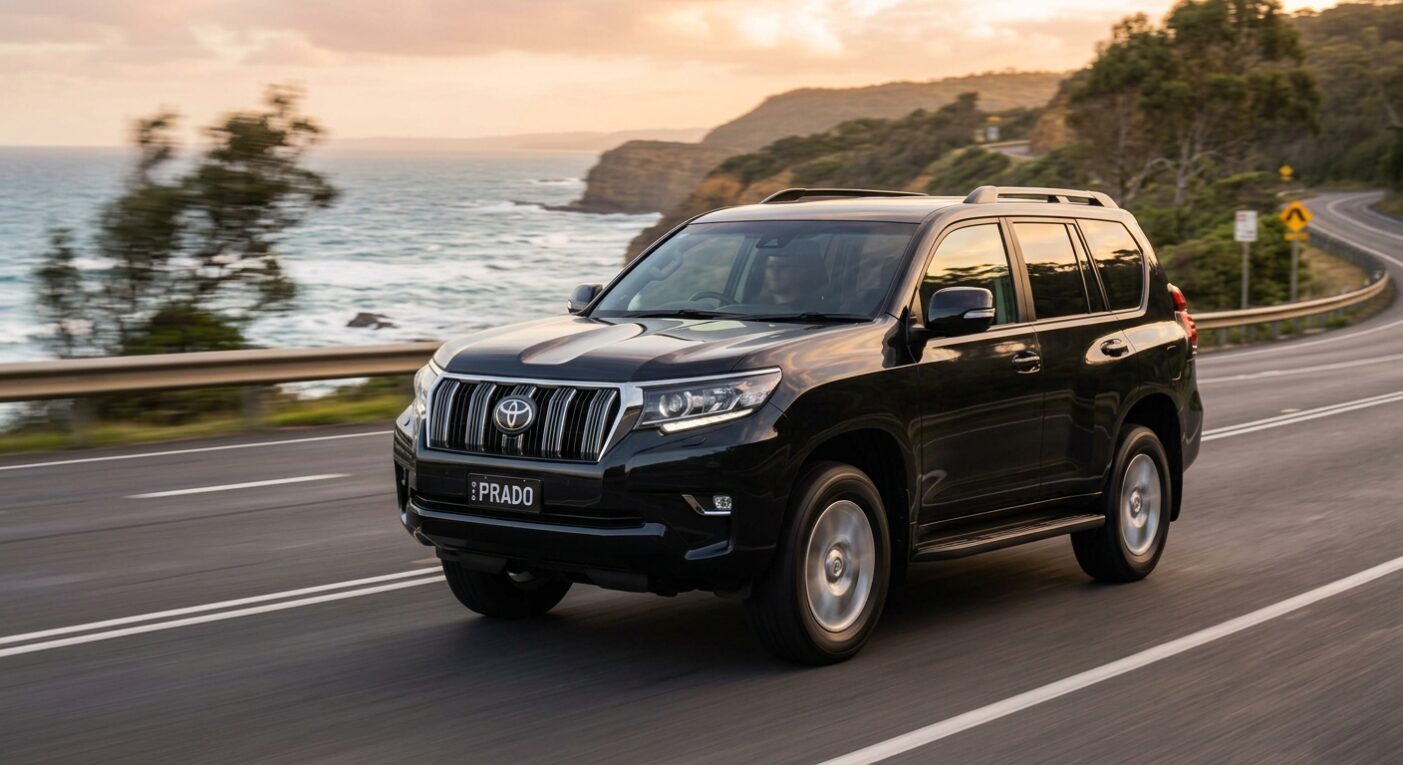
If you are shopping for a Toyota Land Cruiser Prado in Kenya, you will eventually come across two letters that seem simple but can make the buying process surprisingly confusing: TX and TXL. At first glance, the difference can appear to be little more than a trim level. In reality, the equipment, interior features and sometimes drivetrain specifications can differ depending on the Prado generation, model year and market from which the vehicle was imported.
That last part is important because TX and TXL are not universal Toyota specifications. Toyota has used different grades and equipment packages across different markets and generations. A TXL from Japan should not automatically be assumed to have exactly the same equipment as a TXL from another market.
For Kenyan buyers, therefore, the safest approach is to understand the general distinction between the two and then verify the exact specification of the vehicle you are considering.
What Does Prado TX Mean?
TX is generally positioned as the more straightforward Prado grade. It gives buyers the core Land Cruiser Prado package without necessarily including all the luxury and convenience equipment found on higher specifications.
Depending on the generation, a TX can still be a very well-equipped vehicle, with features such as climate control, alloy wheels, fabric or leather-trimmed interiors depending on the exact specification, multiple airbags, ABS and Toyota’s four-wheel-drive system. This is important because a TX should not be interpreted as a basic or poorly equipped Prado.
The Prado itself sits above many ordinary SUVs in Toyota’s range, and even a lower specification can offer a substantial amount of equipment and capability. For buyers who care more about the Prado’s durability, space and off-road ability than having every available luxury feature, a clean TX can make a lot of sense.
So, What Is TXL?
TXL generally sits above TX and adds more equipment and comfort features. Depending on the generation and exact market specification, a TXL may include features such as leather upholstery, upgraded infotainment, larger wheels, additional convenience features, electric seat adjustment, a sunroof, improved interior trim and other equipment that may be optional or unavailable on a particular TX.
But this is where Kenyan buyers need to be careful. There is no single universal “TXL package” that applies to every Prado carrying the TXL badge. Equipment can vary considerably by year, engine, market and factory options. Two Prados advertised as TXL can therefore have noticeably different specifications. That is why comparing the letters alone isn’t enough.
Is TXL More Powerful Than TX?
Not necessarily. This is one of the biggest misconceptions surrounding Prado trim levels. TXL is primarily a higher equipment grade, not automatically a more powerful engine specification. A TX and TXL from the same generation can share the same engine, transmission and four-wheel-drive system.
If you are comparing two Prados, don’t assume the TXL will accelerate faster simply because it sits higher in the range. Engine size, fuel type, transmission and model year are far more important when comparing performance.
For example, a Prado equipped with a 2.8-litre diesel will have a very different performance and fuel-consumption profile from an older Prado fitted with a 3.0-litre diesel or a petrol engine, regardless of whether the badge says TX or TXL.
What About Off-Road Capability?
This is where things become interesting because many buyers assume the TXL is automatically better off-road. In most cases, the fundamental Prado hardware that makes the vehicle capable away from tarmac is shared across multiple grades.
The Land Cruiser Prado’s reputation comes from its body-on-frame construction, four-wheel-drive system, suspension design and Toyota’s approach to durability. Depending on generation and specification, features such as a low-range transfer case, differential locks, Multi-Terrain Select and Crawl Control can significantly influence off-road capability.
Some higher-grade vehicles may have additional electronic systems or equipment, but the TX badge does not mean you are getting a fundamentally inferior off-road vehicle. A well-maintained TX can be just as capable as a TXL when the underlying drivetrain and equipment are equivalent.
Where You Notice the Difference Most
The biggest difference between TX and TXL is usually inside the cabin. A higher-grade TXL tends to feel more luxurious. Depending on the specific vehicle, you may get better upholstery, more sophisticated infotainment, additional electrical adjustments, upgraded audio equipment, larger wheels and other features designed to make everyday driving more comfortable. This becomes particularly noticeable when you spend several hours behind the wheel.
A TX may give you everything you need mechanically, while a TXL adds some of the things you want. That distinction explains much of the price difference between the two.
Is TXL Worth Paying More For?
That depends on how much you value the additional equipment. If you primarily want a Prado because you need a dependable SUV for long-distance travel, rough roads or family use, a well-maintained TX may offer excellent value. You are still getting the core Prado platform without paying as much for luxury features.
If you spend a lot of time in the vehicle and appreciate features such as leather seats, electric adjustments, upgraded infotainment and additional convenience equipment, the TXL may justify the extra money.
There is also the question of resale. Higher-specification Prados generally attract strong demand in Kenya, particularly when they have desirable engines, clean histories and popular equipment. However, condition and history remain extremely important. A neglected TXL is not automatically a better purchase than a properly maintained TX.
TX or TXL: Which One Should You Buy?
For most buyers, the decision comes down to equipment versus value. The TX is usually the better choice if you want the Prado’s core strengths without paying extra for features you don’t particularly care about. It can be an excellent option for someone who prioritises durability, practicality and long-term ownership costs.
The TXL makes more sense if you want the same basic Prado character with a more luxurious and feature-rich interior. But there is an important caveat: don’t pay a large premium for a TXL simply because of the letters on the back. Check exactly what equipment that particular vehicle has. A well-maintained TX with a clean history can be a far better buy than a heavily used TXL whose previous owner neglected servicing.
In short, the Toyota Prado TX and TXL are not two completely different vehicles. In most cases, they share the same fundamental Prado engineering, while the TXL adds equipment and convenience features that make the vehicle feel more upscale. The exact differences, however, depend heavily on the generation, model year and market specification. That’s why broad claims such as “all TXLs have leather” or “TXLs are always more powerful” can be misleading.
If you’re buying a Prado in Kenya, look beyond the badge. Verify the exact specification, inspect the vehicle properly, check its history and compare the price against what you’re actually getting. If you value capability and sensible ownership costs, the TX can be difficult to beat for value. If comfort and additional equipment matter more to you, the TXL may be worth the premium.
Either way, the smartest Prado purchase isn’t necessarily the one with the highest specification. It’s the one with the best combination of condition, history, specification and price.
At Iko Gari, we believe a good car review should help you make a decision rather than make the decision for you. That’s why we focus on the details that matter after the excitement of buying has passed, reliability, running costs, practicality, condition and what you can realistically expect from the vehicle on Kenyan roads.