

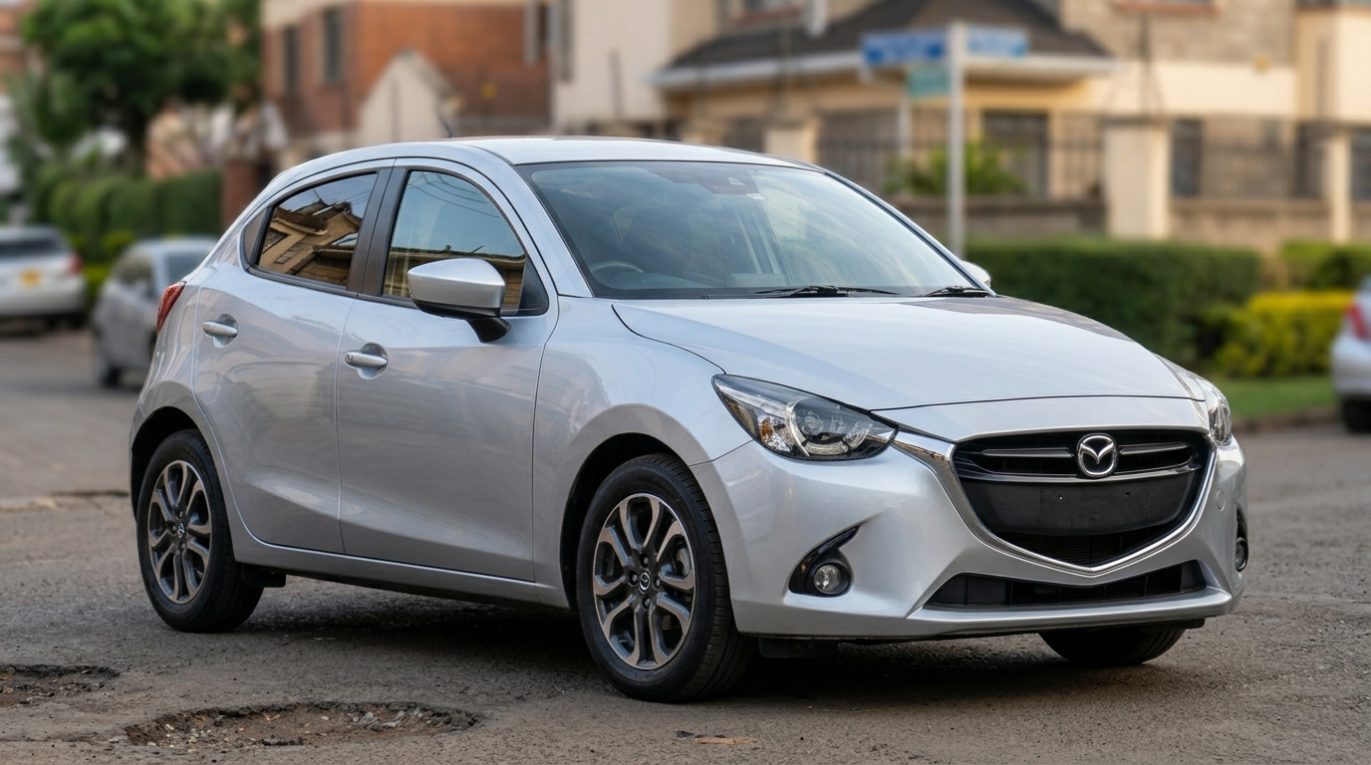
The Mazda Demio has become a familiar choice on Kenyan roads, particularly among first-time car buyers and motorists looking for an economical hatchback. Its compact dimensions, stylish design and relatively good fuel economy have helped it compete with popular alternatives such as the Toyota Vitz, Honda Fit and Suzuki Swift.
But with newer small cars entering the market, is the Demio still worth buying? For buyers considering a used import, the answer largely depends on the engine, condition and what they expect from a small car.
Design and comfort
The Demio’s appeal starts with its design. The fourth-generation model, introduced in 2014 and also marketed as the Mazda2 in other markets, has a more mature appearance than many cars in its class. Its front grille, sculpted bodywork and compact proportions give it a sporty character without making it unnecessarily large.
Inside, the cabin is reasonably well designed, with a straightforward dashboard and comfortable seating for everyday journeys. Later models offer features such as keyless entry, push-button start, infotainment displays and automatic climate control, depending on the grade.
Space is adequate for a small hatchback. The Demio accommodates five occupants, although the rear seats are more comfortable for two adults than three on longer journeys. Boot space is also modest, making it better suited to shopping bags and small luggage than large family trips.
Its compact size is a practical advantage in Nairobi, where narrow parking spaces, congestion and frequent manoeuvring are part of everyday driving. The relatively low ground clearance, however, requires some caution on high speed bumps and badly maintained roads.
Engine and fuel consumption
One reason the Demio remains popular is its engine efficiency. The fourth-generation model commonly found in Kenya comes with a 1.3-litre Skyactiv-G petrol engine, while some versions have a 1.5-litre petrol or 1.5-litre Skyactiv-D diesel engine. Specifications vary by market and model year.
The 1.3-litre petrol is arguably the most straightforward option for buyers who mainly drive around town. It offers adequate performance for daily commuting, school runs and occasional highway journeys. It is not particularly powerful, but the lightweight body helps it feel responsive during normal driving.
The 1.5-litre petrol provides another option for motorists who want slightly more performance. The diesel version is particularly attractive on paper because of its fuel economy, but it requires more careful consideration.
The Skyactiv-D engine uses advanced emissions technology, including a diesel particulate filter. Frequent short journeys and stop-start driving can interfere with the filter’s regeneration process, potentially leading to soot accumulation and expensive repairs. For someone who spends most of their time navigating Nairobi traffic, the petrol version is generally the more sensible choice.
Actual fuel consumption depends on the engine, transmission, traffic conditions and maintenance. The Demio is economical, but buyers should avoid relying entirely on advertised Japanese fuel-economy figures.
What to check before buying
The Demio is not particularly difficult to maintain in Kenya, and its growing popularity has improved access to routine service parts and mechanics familiar with the model. However, certain components, especially body parts and less common electronic equipment, can still be relatively expensive.
Before purchasing, pay attention to the transmission, engine performance, suspension and cooling system. During a test drive, check for hesitation, unusual noises, jerking or warning lights. A diagnostic scan can help identify faults that may not be immediately obvious.
The Skyactiv petrol versions also use specific battery requirements on models equipped with i-stop, Mazda’s engine stop-start system. Using an unsuitable replacement battery can interfere with the system’s operation, so confirm the correct battery specification before replacing it.
For imported vehicles, inspect the available auction and service records, verify the mileage and have the car checked by a mechanic familiar with Mazda models. Do not overlook the underbody and suspension, particularly if the vehicle has previously been driven on rough roads.
So, is the Mazda Demio still worth buying? No doubt, it remains a strong option for Kenyan buyers who want a stylish, economical and easy-to-drive hatchback. The 1.3-litre petrol version is particularly appealing for everyday urban use, while the larger petrol option suits buyers who want a little more performance.
Its limitations are fairly straightforward: modest luggage space, restricted rear-seat comfort, relatively low ground clearance and less versatility than a larger hatchback or compact SUV.
Compared with the Toyota Vitz, the Demio offers a more engaging driving experience and a distinctive interior design, while the Vitz benefits from Toyota’s extensive parts and servicing network. The final decision should come down to the condition, price and maintenance history of the individual vehicle.
For buyers who find a clean, properly maintained unit, the Demio still makes a compelling case. It may not be the newest option in its class, but it continues to offer a practical balance of economy, comfort and driving enjoyment.