

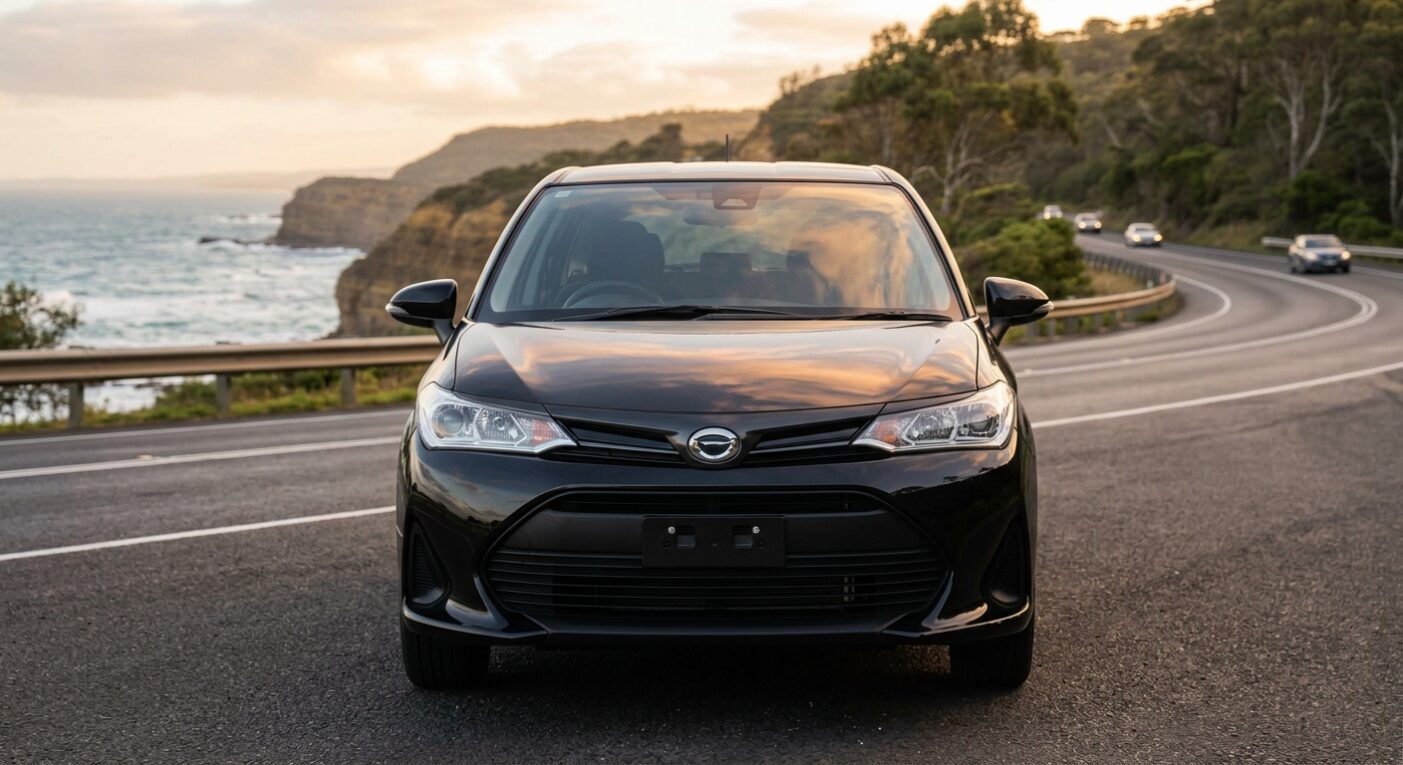
There are very few cars in Kenya that have quietly built the reputation enjoyed by the Toyota Fielder Hybrid. It is not flashy, it rarely turns heads, and few people buy it to make a statement. Yet visit almost any supermarket parking lot, government office, corporate headquarters, or residential estate, and chances are you’ll spot several parked side by side.
That popularity is no accident. The Toyota Fielder Hybrid has earned the trust of Kenyan motorists by delivering something many vehicles struggle to balance: practicality, reliability, fuel economy, and relatively affordable ownership. For families, business owners, ride-hailing drivers, and professionals who spend long hours on the road, it has become one of the safest choices in the used car market.
But does it still deserve that reputation in 2026? The answer depends on what you expect from your next vehicle.
One of the biggest strengths of the Fielder Hybrid is that it was designed around everyday usability rather than luxury. Unlike many crossovers that sacrifice luggage space for styling, the Fielder remains a true station wagon. The boot is surprisingly spacious, comfortably accommodating luggage, shopping, business deliveries, or even farming produce without feeling cramped.
For many Kenyan families, this versatility is invaluable. A single vehicle can comfortably serve weekday commuting duties before transforming into a family travel car during weekends or holidays. Small businesses also appreciate the extra cargo space without having to purchase a van.
Fuel economy is another reason why the Fielder Hybrid continues to attract buyers. Although actual consumption depends on driving habits, road conditions, tyre pressure, and vehicle maintenance, many owners report achieving between 20 and 28 kilometres per litre during mixed driving conditions. Urban traffic, where hybrid systems perform particularly well, often allows drivers to experience the greatest fuel savings because the electric motor assists during low-speed movement and frequent stops.
This efficiency becomes especially important in Kenya, where fuel prices remain one of the largest recurring costs of vehicle ownership. For motorists covering hundreds of kilometres each week, the savings accumulated over several years can be significant.
The hybrid system itself is often misunderstood by first-time buyers. Unlike a fully electric vehicle, the Toyota Fielder Hybrid does not require external charging. The high-voltage battery is continuously recharged while driving through regenerative braking and the petrol engine. This means owners simply refuel normally at petrol stations without worrying about charging infrastructure.
For Kenyan motorists, this eliminates one of the biggest concerns associated with electric vehicles while still delivering meaningful improvements in fuel efficiency.
Performance is unlikely to excite driving enthusiasts, but that is not the purpose of the Fielder Hybrid. Acceleration is smooth rather than aggressive, and the transition between electric assistance and petrol power is generally seamless. The vehicle feels comfortable during city driving and remains composed on highways, although drivers carrying heavy loads may notice that overtaking requires more planning than it would in larger engine vehicles.
Ride comfort is another area where the Fielder performs well. The suspension handles most urban roads comfortably, absorbing ordinary bumps without excessive harshness. While rough rural roads and deep potholes will naturally affect ride quality, the Fielder generally copes well with the conditions encountered by most Kenyan motorists. Its relatively high availability of replacement suspension components also helps keep maintenance costs reasonable.
Inside the cabin, Toyota chose practicality over extravagance. The controls are intuitive, visibility is excellent, and rear passengers enjoy generous legroom for a vehicle in this class. Depending on the trim level, buyers may find features such as automatic climate control, push-button start, multifunction steering controls, reverse cameras, and advanced safety systems. Even older models remain functional because Toyota prioritized durability rather than unnecessary complexity.
One of the strongest arguments in favour of the Fielder Hybrid is its reputation for reliability. Mechanics across Kenya are now familiar with the model, and many have accumulated years of experience servicing Toyota’s hybrid systems. Routine maintenance is generally straightforward, and most service items including filters, brake components, suspension parts, and engine consumable are widely available.
The hybrid battery continues to generate questions among prospective buyers, but experience has largely replaced speculation. Many original batteries continue operating effectively after years of service, although their condition naturally depends on age, mileage, climate, and maintenance history. Buyers should nevertheless insist on a professional inspection before purchasing any used hybrid vehicle. Battery health should be evaluated alongside the engine, transmission, suspension, and electronic systems rather than assumed to be either perfect or defective.
Spare parts availability has improved considerably over the past decade. Because the Toyota Fielder is one of Kenya’s most common imported vehicles, replacement parts are readily available through dealerships, independent suppliers, and used parts dealers. This widespread availability contributes significantly to lower long-term ownership costs.
Resale value is another area where the Fielder Hybrid performs exceptionally well. Kenya’s used vehicle market consistently rewards vehicles that have established reputations for reliability and economical operation. The Fielder benefits from both. Well-maintained examples often retain their value better than many competing station wagons, making them attractive not only as daily drivers but also as long-term investments.
That said, the Toyota Fielder Hybrid is not the perfect car for everyone. Drivers seeking rapid acceleration or premium interior finishes may find it underwhelming. Likewise, buyers who regularly tow heavy loads or frequently travel on challenging off-road terrain may be better served by larger SUVs or four-wheel-drive vehicles. The Fielder was designed primarily for efficient road use rather than demanding off-road conditions.
Prospective buyers should also be cautious when purchasing imported vehicles with incomplete service histories. As with any used car, condition matters far more than registration year alone. A well-maintained 2017 Fielder Hybrid may provide greater reliability than a neglected 2020 model.
The Toyota Fielder Hybrid’s enduring popularity ultimately reflects changing priorities among Kenyan motorists. Rising fuel costs, improving confidence in hybrid technology, widespread availability of spare parts, and strong resale values have made efficient ownership more important than outright performance or luxury.
For buyers looking for a dependable family car, an economical commuter, or a practical business vehicle, few models combine versatility and operating efficiency as successfully as the Toyota Fielder Hybrid. It is not exciting because it was never designed to be. Instead, it excels at something far more valuable: quietly performing its job day after day while asking remarkably little in return.
If you are considering buying a used Toyota Fielder Hybrid, take time to compare different model years, inspect the vehicle thoroughly, verify its service history, and where possible, have it examined by a qualified mechanic familiar with hybrid systems. A careful purchase today can reward you with years of economical and dependable motoring.