


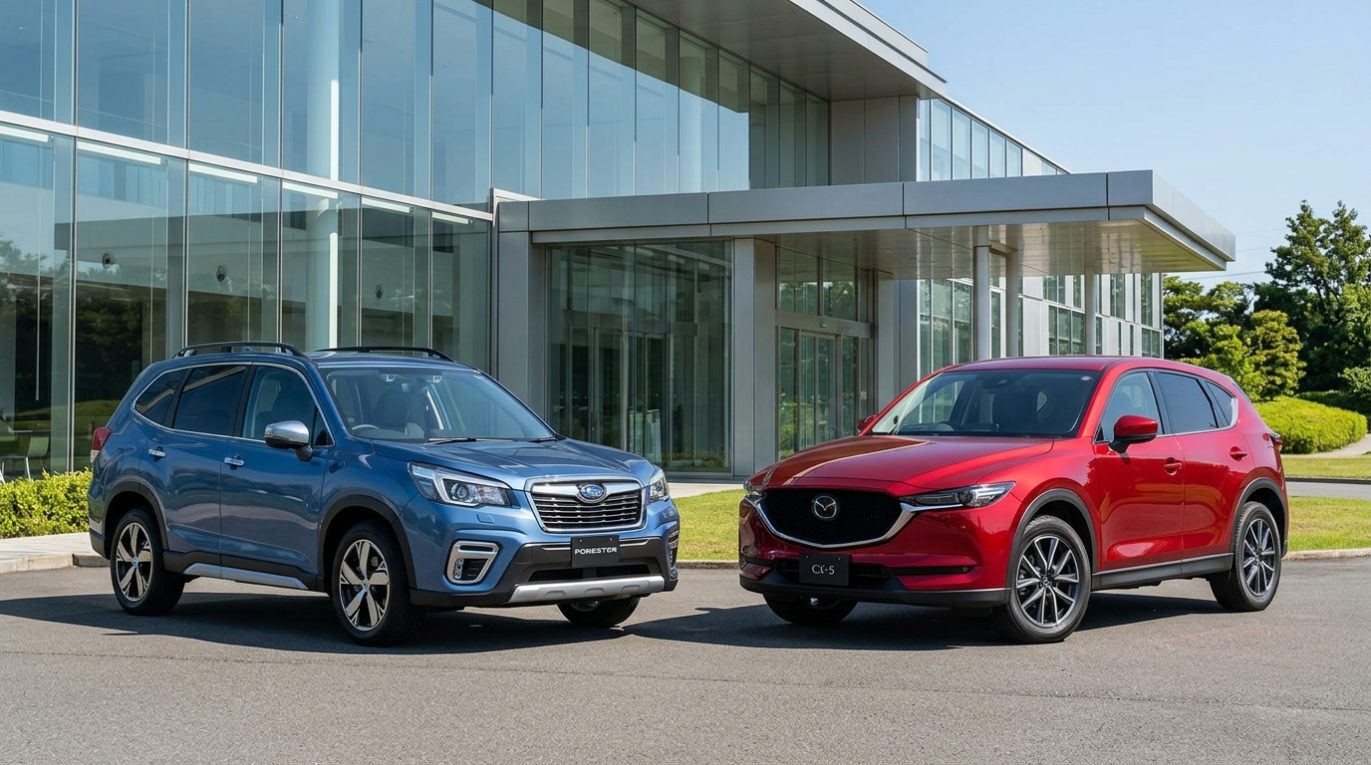
The Subaru Forester and Mazda CX-5 occupy a similar space in the Kenyan market. Both are compact SUVs, both are popular with buyers who want something more substantial than a sedan, and both can comfortably handle everyday Nairobi driving as well as longer trips upcountry.
But they have very different personalities. The Forester has built a strong reputation in Kenya for its sure-footedness, practicality and ability to deal with less-than-perfect roads. The CX-5, meanwhile, appeals to buyers who want an SUV that feels more refined, more car-like and enjoyable to drive.
So, between the two, which one is better for a Kenyan buyer? The answer depends heavily on where and how you drive.
The Forester’s biggest advantage is its approach to traction. Many versions use Subaru’s symmetrical all-wheel-drive system, giving the vehicle good grip when roads become slippery or uneven. That can be useful during heavy rain, on muddy roads and when travelling on rough rural routes.
It does not turn the Forester into a hardcore off-roader, but it gives the car a level of confidence that is valuable on Kenyan roads.
The CX-5 is available in both front-wheel-drive and all-wheel-drive configurations depending on the market and specification. For most urban Kenyan buyers, the front-wheel-drive version is perfectly adequate. If you rarely encounter mud or seriously damaged roads, there is little reason to choose four-wheel drive simply because the vehicle is an SUV.
The difference becomes more obvious when the road deteriorates. The Forester generally feels more at home when the surface becomes rough, while the CX-5’s strengths become clearer on normal tarmac.
Mazda put considerable effort into making the CX-5 feel like a driver’s car. Its steering is composed, the suspension is well controlled and the cabin feels more polished than many SUVs in the same class. The Forester is comfortable too, but its priorities are slightly different. The driving position gives you good visibility, the cabin is practical and the vehicle feels reassuring rather than particularly sporty.
Engine choice is another important consideration. Kenyan-market Foresters vary considerably by generation and import source. Naturally aspirated petrol engines are common, while some versions use Subaru’s turbocharged engines. The turbocharged models are much quicker, but they also demand more attention to maintenance and are not necessarily the best choice for someone whose priority is keeping ownership costs predictable.
The CX-5 is similarly available with different petrol and diesel engines depending on generation and market. The naturally aspirated 2.0-litre petrol is a sensible choice for many buyers looking for straightforward everyday use, while larger or turbocharged engines offer more performance at the expense of greater complexity and, potentially, running costs.
Neither manufacturer gives you a single universal engine choice, so buyers should pay attention to the exact specification of the car they are inspecting.
Fuel economy can also favour the CX-5 in some configurations. The Forester’s permanent all-wheel-drive system adds weight and mechanical complexity, while the CX-5 can be lighter and more efficient in front-wheel-drive form. Actual consumption will depend on the engine, transmission, traffic and driving style, but someone spending most of their time in Nairobi may find the CX-5 easier on fuel.
The Forester’s advantage becomes more obvious when you leave the city. This is where the question of ground clearance and road conditions comes in. Kenya has plenty of roads where a little extra clearance and good suspension travel are useful. The Forester’s relatively upright design and capable AWD system make it comfortable on rougher surfaces.
But the CX-5 should not be dismissed as a delicate city SUV. It has enough clearance for normal Kenyan roads and can handle potholes and uneven surfaces perfectly well when driven sensibly.
The bigger issue with either vehicle is often the condition of the particular unit. A Forester with worn suspension, damaged bushes and poor tyres will not magically become capable simply because it has all-wheel drive. Likewise, a CX-5 with good tyres and properly maintained suspension can handle rough roads better than a neglected Forester. This is particularly important when buying used.
Subarus also deserve careful inspection of their engine and transmission history. Look for oil leaks, overheating, unusual noises and evidence of poor maintenance. On turbocharged versions, the condition of the turbocharging system matters as well.
On the CX-5, inspect the suspension, automatic transmission, cooling system and engine carefully. Diesel versions deserve additional attention because diesel emissions systems can become expensive when neglected.
The interior is another area where the Mazda tends to have an advantage. The CX-5 generally feels more premium. Materials, dashboard layout and driving position give it a more sophisticated atmosphere, particularly in higher grades.
The Forester counters with practicality. Its cabin is airy, visibility is excellent and the square shape makes it easy to use. It is the sort of vehicle that works well for a family without requiring you to think too much about how to use the space. Rear-seat and boot space are useful in both, although the Forester’s upright shape gives it a particularly practical feel.
Then there is resale.. The Subaru name has a loyal following in Kenya, particularly among buyers who appreciate its AWD system and driving characteristics. The CX-5 also has strong recognition and has become increasingly popular among buyers looking for a refined Japanese SUV. Neither should be bought purely for resale value, however. Engine, year, condition, mileage and history can make a bigger difference than the badge.
So which one should you buy? If your driving is mostly Nairobi, highways and well-maintained roads, and you want better refinement, a more polished interior and potentially lower running costs, the Mazda CX-5 makes a very strong case. If you regularly travel upcountry, encounter rough or muddy roads, drive during heavy rains or simply value all-wheel-drive confidence, the Subaru Forester becomes more attractive.