


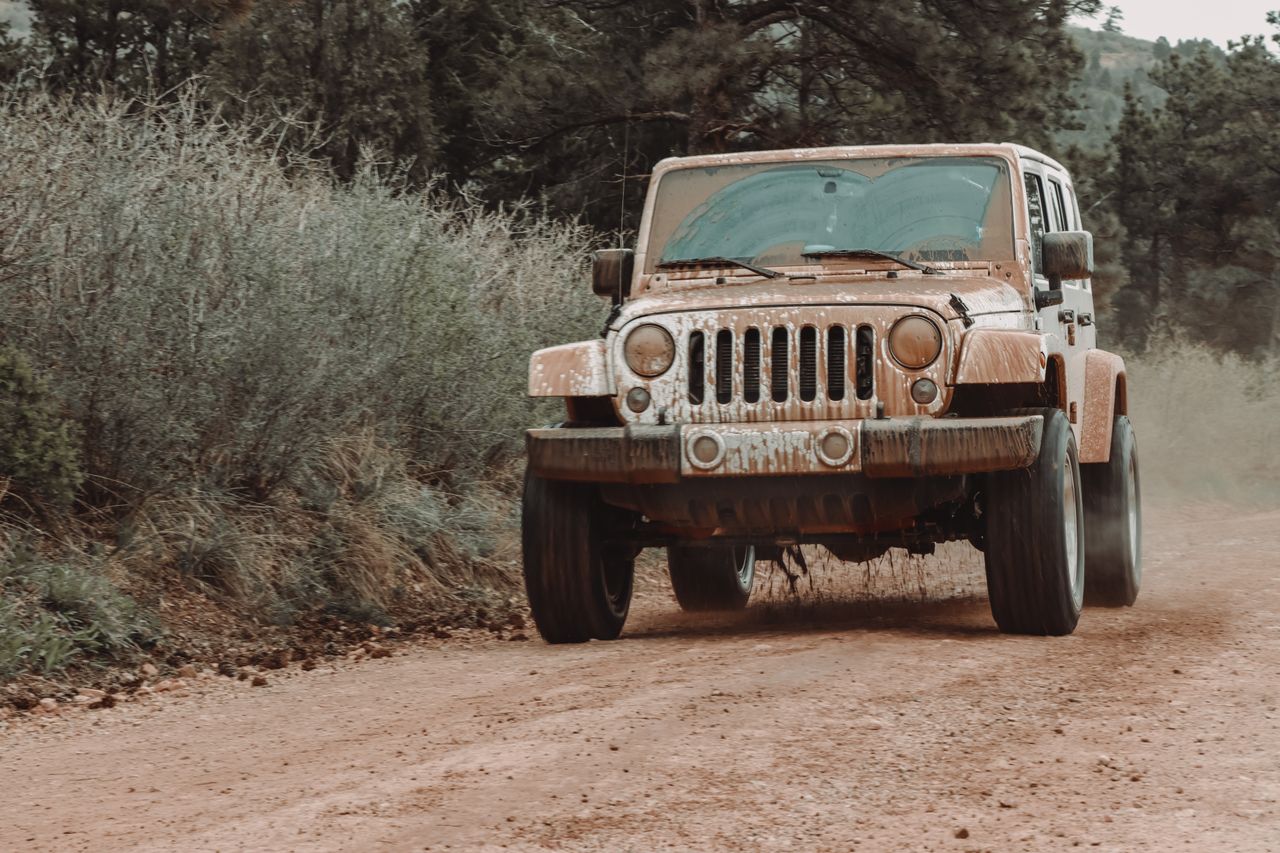
A car can feel perfectly comfortable on a smooth highway and completely different once the road becomes rough. The steering starts feeling heavier. The suspension becomes noisy. You begin slowing down for potholes that another vehicle seems to cross without much drama. After a few months, you may even find yourself replacing bushes, shock absorbers or tyres more often than expected.
It is easy to blame the road, and sometimes the road really is the problem. But some vehicles are simply better suited to rough surfaces than others.
The difference is not always about whether a car is an SUV or a small hatchback. It comes down to how the vehicle is designed, the condition of its suspension, the tyres it uses, its ground clearance, wheel size and, perhaps most importantly, how it is driven.
Ground clearance is the most obvious factor. A vehicle with more clearance underneath has more room to deal with potholes, raised sections, stones and uneven surfaces without the underside making contact with the road.
This is one reason crossovers and SUVs are popular with Kenyan buyers. They do not necessarily need to be serious off-road vehicles. Even a modest increase in ride height can make a noticeable difference on rough urban roads, rural roads and areas where drainage problems have damaged the road surface.
But ground clearance is not everything. A car can have reasonable clearance and still struggle on rough roads because of its suspension setup. Some vehicles are tuned primarily for comfort and smoothness, while others are designed to provide greater control over uneven surfaces.
The suspension has to absorb the movement of the road while keeping the tyres in contact with the surface. When a vehicle encounters a pothole, the shock absorber, spring, bushes and other suspension components all have to work together. If any of these components are worn, the car may begin to feel unsettled.
This is why an older vehicle that once handled Kenyan roads comfortably can gradually become unpleasant to drive. The design has not changed. The suspension has simply aged.
Worn shock absorbers can make the vehicle bounce excessively after hitting a bump. Worn bushes can produce knocking sounds and allow components to move more than they should. Damaged ball joints can affect steering and stability.
A rough road therefore does not necessarily destroy a good car. It often exposes a suspension system that was already approaching the end of its useful life.
Tyres make another major difference. A vehicle running on high-profile tyres has more rubber between the wheel rim and road surface. That sidewall can absorb some of the impact from potholes and rough surfaces.
Low-profile tyres, on the other hand, can look excellent and improve handling on smooth roads, but they generally provide less cushioning against sharp potholes. The wheel itself is also more exposed to damage.
This is particularly relevant in Kenya because large wheels have become increasingly common even on vehicles that are not designed for serious off-road use. A 19-inch or 20-inch wheel may look impressive, but replacing a damaged tyre or bent rim after a bad pothole can be considerably more expensive than dealing with a smaller wheel and a higher-profile tyre.
Tyre pressure matters too. Underinflated tyres can make a car feel soft and unstable, while excessive pressure can make the ride harsh and reduce the amount of cushioning available from the tyre.
The correct pressure is therefore more important than simply trying to make the car feel softer or harder. Use the manufacturer’s recommended pressure rather than guessing.
Weight also affects how a vehicle behaves. A heavily loaded car places greater demands on its suspension, tyres and brakes. This becomes particularly noticeable when travelling on rough roads with several passengers and luggage. A vehicle that feels composed with two people inside may behave very differently when fully loaded.
This is one reason commercial vehicles and pickups designed to carry heavy loads use suspension systems that can feel quite firm when the vehicle is empty. Their suspension has been designed with a different purpose in mind.
The type of road matters as well. There is a big difference between a road with a few potholes and one covered in deep corrugations, exposed rocks or severe erosion. A vehicle that handles occasional potholes well may struggle on a road where the suspension is constantly moving.
Driving speed then becomes critical. A pothole hit at 20 km/h and the same pothole hit at 70 km/h are not the same event. The faster the vehicle is travelling when it encounters an obstacle, the greater the energy that the suspension, tyre and wheel have to absorb.
This is why even a rugged vehicle can suffer serious damage if driven aggressively over rough roads. The impact can damage tyres, bend wheels and accelerate wear in suspension components. In severe cases, it can affect alignment or damage steering components.
There is also a difference between ground clearance and off-road capability that buyers sometimes overlook. A vehicle may sit relatively high off the ground but still not be designed for difficult terrain. Four-wheel drive, suspension travel, approach and departure angles, tyre design and underbody protection all matter when a vehicle is being taken beyond ordinary rough roads.
For normal Kenyan driving, you do not necessarily need a hardcore 4×4. A vehicle with sensible ground clearance, good tyres, durable suspension and appropriate wheel sizes may be perfectly capable of dealing with the roads most Kenyan drivers encounter.
This is also why the condition of a used car matters so much. A well-maintained Toyota, Mazda, Subaru, Nissan or other mainstream vehicle can handle rough roads much better than a neglected unit of the same model. Two identical cars can have completely different driving experiences because one has fresh shock absorbers, good tyres and properly maintained suspension while the other has worn components.
There is another factor that is often forgotten: wheelbase. Longer vehicles can provide a smoother ride over some types of uneven surfaces because their wheels are further apart, while shorter vehicles can sometimes feel more abrupt over closely spaced bumps. But there is no universal rule that a longer wheelbase automatically makes a vehicle better on Kenyan roads. Suspension tuning, tyre size and vehicle weight all influence the result.
Ultimately, there is no single vehicle that is perfect for every Kenyan road. A small hatchback may be perfectly comfortable for someone who spends most of their time on good tarmac in Nairobi. A crossover may make more sense for someone who regularly encounters potholes and uneven roads. Someone travelling frequently on badly damaged rural roads may have very different requirements altogether.
The mistake is buying a vehicle based only on how it looks or how it drives on a smooth road. Kenyan roads can be demanding, and your car should match the roads you actually use. Because when it comes to rough roads, the question is not simply whether a car can survive the pothole. It is how much the pothole will cost you afterwards.