

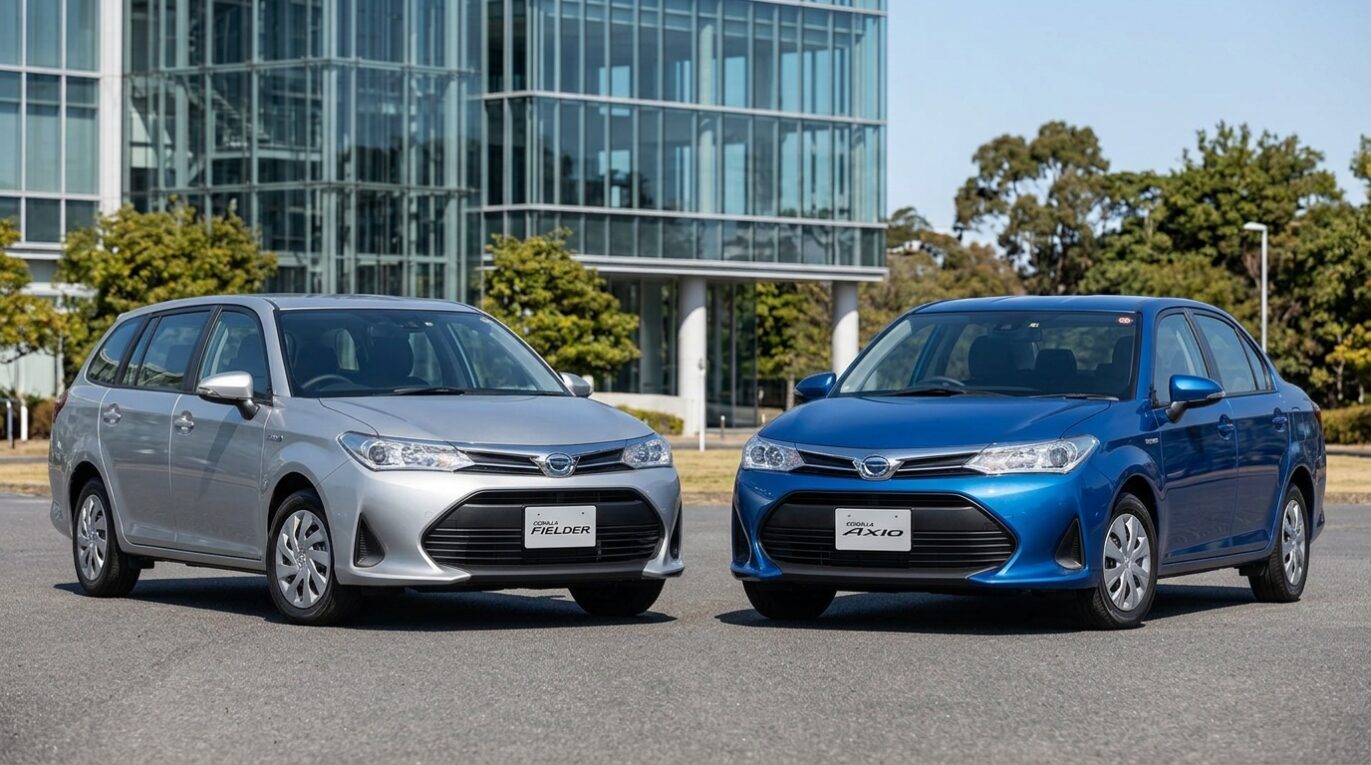
Few debates in Kenya’s automotive market are as common as the Toyota Axio versus Toyota Fielder discussion. Whether at car yards, import dealerships, ride-hailing forums, or family gatherings, prospective buyers often find themselves weighing these two popular Toyota models against each other.
The reason is simple: both vehicles have built a reputation for reliability, fuel efficiency, affordable maintenance, and strong resale value. In fact, the Axio and Fielder are so closely related that they share the same platform, engine options, and many mechanical components. Yet despite these similarities, they appeal to very different types of buyers. As the used car market continues to evolve in 2026, which of these two Toyota favourites offers the better value?
Understanding the Difference
At first glance, the Toyota Axio and Toyota Fielder appear to be siblings, and they are. Both belong to Toyota’s Corolla family and were designed to serve different needs. The Axio is a compact sedan focused on efficiency and urban practicality, while the Fielder is essentially the station wagon version of the same vehicle, offering significantly more cargo space and versatility.
Mechanically, many Axio and Fielder units imported into Kenya share the same 1.3-litre or 1.5-litre petrol engines. This means fuel consumption, servicing requirements, and spare part availability are often nearly identical. The real difference comes down to how the vehicle is used.
Fuel Economy: A Near Tie
Fuel efficiency remains one of the biggest considerations for Kenyan motorists, especially as fuel costs continue to influence household and business budgets.
In real-world driving conditions, both the Axio and Fielder perform exceptionally well. The 1.5-litre variants typically deliver fuel consumption figures ranging between 15 and 20 kilometres per litre depending on driving conditions, vehicle condition, and maintenance history.
Because the Fielder carries a slightly larger body and may often be used to transport heavier loads, some owners report marginally higher fuel consumption compared to the Axio. However, the difference is usually too small to be a deciding factor. For buyers focused purely on fuel economy, there is no clear winner.
Interior Space: Where the Fielder Pulls Ahead
This is where the conversation begins to shift. The Axio offers a comfortable cabin for daily commuting and small family use. Four adults can travel comfortably, and the boot is sufficient for groceries, luggage, or occasional travel.
The Fielder, however, takes practicality to another level. Its extended rear section provides considerably more cargo capacity, making it ideal for families, business owners, sales representatives, and anyone who regularly transports goods. The rear seats can also be folded down to create additional storage space, something that has made the Fielder particularly popular among small business operators.
In Kenya, it is not uncommon to find Fielder owners using their vehicles for both family transport during the week and business logistics on weekends. If cargo flexibility matters, the Fielder is the clear winner.
Driving Experience: Axio Feels More Refined
Although the two vehicles share similar engineering, the driving experience is slightly different. The Axio feels lighter, more compact, and easier to manoeuvre in congested urban environments. Navigating Nairobi traffic, squeezing into parking spaces, and making quick city trips often feels more natural in the sedan.
The Fielder remains comfortable and stable, but its larger rear profile can make it feel slightly bulkier, particularly for drivers accustomed to compact sedans. For motorists whose driving is almost entirely urban, the Axio tends to offer a more refined day-to-day experience.
Maintenance and Spare Parts
One of the reasons both models remain among Kenya’s most sought-after imports is the ease of maintenance. Toyota’s extensive presence in the country means spare parts are readily available in Nairobi, Mombasa, Kisumu, Nakuru, Eldoret, and virtually every major town. Independent mechanics are also highly familiar with both models.
Since the Axio and Fielder share many mechanical components, servicing costs are largely comparable. Routine maintenance such as oil changes, brake replacements, suspension repairs, and engine servicing remains relatively affordable compared to many competing brands. In this category, neither vehicle enjoys a significant advantage over the other.
Resale Value: Both Perform Exceptionally Well
Resale value continues to be one of Toyota’s greatest strengths in Kenya. Both the Axio and Fielder retain value remarkably well due to strong demand in the second-hand market. Buyers know what they are getting, and the vehicles have established a long track record of reliability.
However, market observations suggest the Fielder may currently enjoy slightly stronger demand because of its versatility. Many buyers see it as a vehicle that can serve multiple purposes, family car, business vehicle, or ride-hailing asset. That flexibility often translates into a broader pool of potential buyers when it comes time to sell.
Which Vehicle Makes More Sense in 2026?
The answer depends entirely on your lifestyle. For urban professionals, daily commuters, and buyers who prioritise comfort, simplicity, and city driving, the Toyota Axio remains one of the smartest purchases in Kenya’s used car market. It delivers excellent fuel economy, strong reliability, and the kind of low ownership costs that have made Toyota a household name.
For families, entrepreneurs, transport operators, and buyers who value versatility, the Toyota Fielder offers more practical benefits. The additional cargo space can make a meaningful difference without sacrificing the reliability and efficiency that Toyota owners expect. In many ways, the Fielder represents the more flexible vehicle, while the Axio remains the more focused one.
Final Verdict
If the decision is based purely on practicality and versatility, the Toyota Fielder edges ahead in 2026. Its larger cargo area, family-friendly design, and strong demand in the resale market make it an exceptionally well-rounded vehicle for Kenyan roads.
However, the margin is not dramatic. The Toyota Axio remains one of the most sensible sedans available, particularly for drivers who spend most of their time in urban environments and have little need for additional cargo capacity.
Ultimately, neither choice is a mistake. Both vehicles have earned their reputation through years of dependable service, affordable maintenance, and strong resale performance. The better buy is simply the one that best matches how you intend to use it.
Whether you’re searching for a fuel-efficient sedan for daily commuting or a versatile wagon for family and business use, finding the right vehicle starts with choosing the right marketplace.
At Iko Gari, we believe finding the right car starts with making the right decision. That’s why we provide trusted reviews, practical buying guides, ownership advice, and expert insights to help you choose a vehicle that fits your lifestyle and budget. Whether you’re considering a Toyota Axio, Toyota Fielder, or any other model, we’re here to help you compare your options, understand long-term ownership costs, and buy with confidence.