


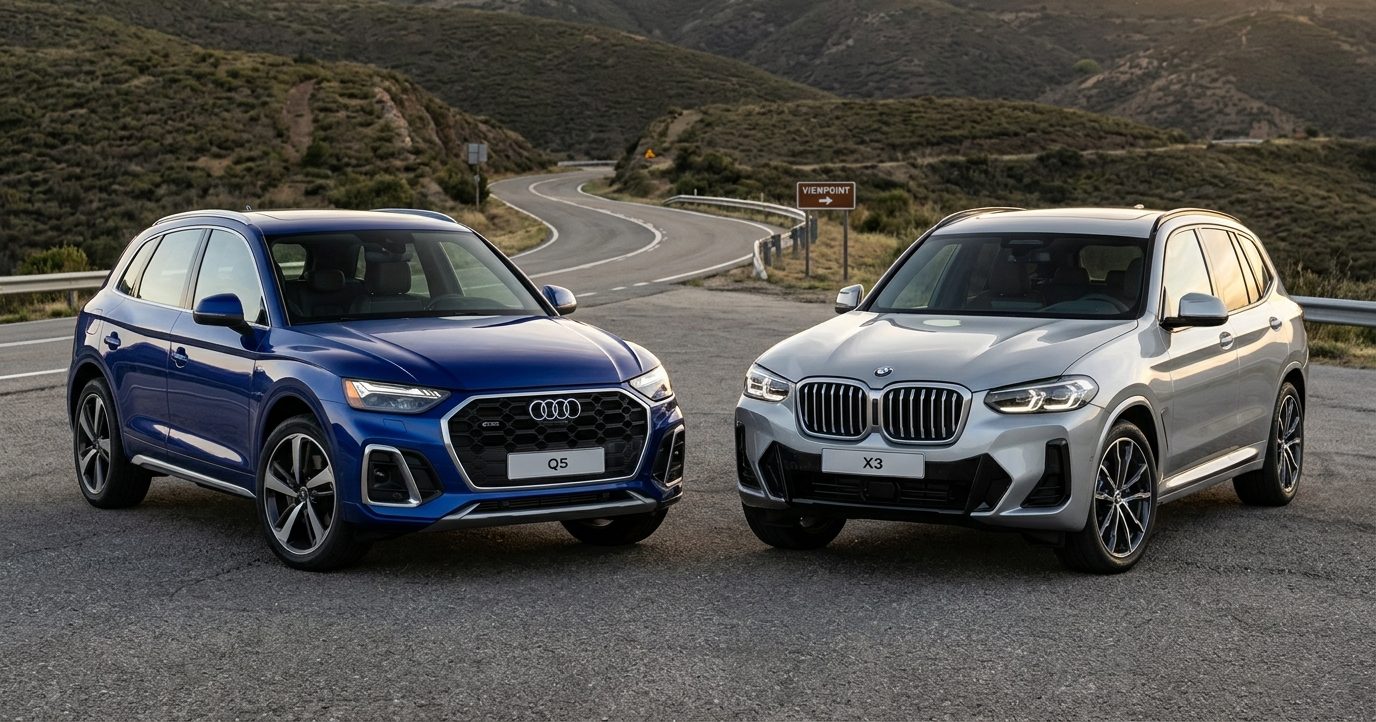
The Audi Q5 and BMW X3 appeal to drivers who want a premium SUV without moving up to a much larger vehicle. Both offer comfortable cabins, strong performance and a commanding driving position, but they approach the driving experience differently.
For Kenyan buyers considering a used import, the decision goes beyond the badge. Fuel consumption, repair costs, parts availability and the condition of the individual vehicle can make a bigger difference than the specifications on paper.
Design and comfort
The Audi Q5 takes a restrained approach to luxury. Its styling is understated, while the cabin focuses on a clean dashboard layout, quality materials and a relaxed driving experience. It suits buyers who want a premium vehicle that feels comfortable on daily commutes and longer journeys.
The BMW X3 has a sportier character. Its styling is more assertive, and the driver’s seat and controls emphasise the driving experience. Depending on the generation and trim, the X3 can feel more engaging behind the wheel, while the Q5 often appeals to drivers who prioritise a composed, comfortable ride.
Both offer practical five-seat cabins. Rear-seat space, luggage capacity and equipment vary by model year, so inspect the exact version rather than assuming every Q5 or X3 has the same features.
Performance and consumption
Both SUVs have been sold with several petrol and diesel engines, depending on the generation and market. Many used imports offer turbocharged four-cylinder engines, while more powerful versions are available at higher running costs.
The BMW X3 is generally the more natural choice for drivers who enjoy sharper handling and responsive performance. The Audi Q5 delivers capable acceleration and confident road manners, particularly in versions equipped with quattro all-wheel drive.
Fuel economy depends on the specific engine, transmission, drivetrain and condition. A diesel version may suit drivers who regularly cover long distances, while a petrol model can be appropriate for mixed everyday use. However, frequent short journeys and Nairobi traffic can affect consumption, and diesel emissions systems may need attention on vehicles used mainly for short urban trips.
Neither model should be chosen on advertised fuel economy alone. Compare the exact engine versions and have the vehicle inspected before committing.
Maintenance and ownership costs
This is where buyers need to look beyond the showroom appeal. Both the Q5 and X3 are sophisticated European SUVs, and neither should be treated like a low-cost economy car when it comes to repairs.
Routine servicing, quality replacement parts, tyres and suspension work can be expensive. Problems involving turbochargers, automatic transmissions, cooling systems, electronic components or all-wheel-drive systems can add substantially to the cost of ownership.
The Q5 and X3 have different engine and transmission combinations across their generations, so there is no universal answer to which one is cheaper to maintain. Parts availability and specialist knowledge also vary by component and model.
So, which one is better for Kenyan roads? We can all agree that both can handle normal urban driving and highway journeys comfortably. Their ground clearance and suitability for rough roads vary by generation, wheels and suspension specification. Neither is a substitute for a dedicated off-road vehicle simply because it has all-wheel drive.
For Nairobi driving, consider parking, tyre costs and the condition of the roads you regularly use. Larger wheels may look attractive, but tyres can be more expensive, and low-profile tyres offer less protection against pothole damage.
If you frequently travel upcountry, inspect the underbody, suspension and tyres carefully. A vehicle with a good maintenance record and suitable tyres is a better prospect than one chosen solely for its badge or appearance.
Which should you buy?
The Audi Q5 is worth shortlisting if you prefer understated styling, a comfortable cabin and composed everyday driving. The BMW X3 is a strong option if you favour sportier handling and a more driver-focused feel. Neither is automatically the better buy. Compare vehicles of similar age, mileage, engine specification and condition, then factor in the cost of servicing and any repairs they may need.