

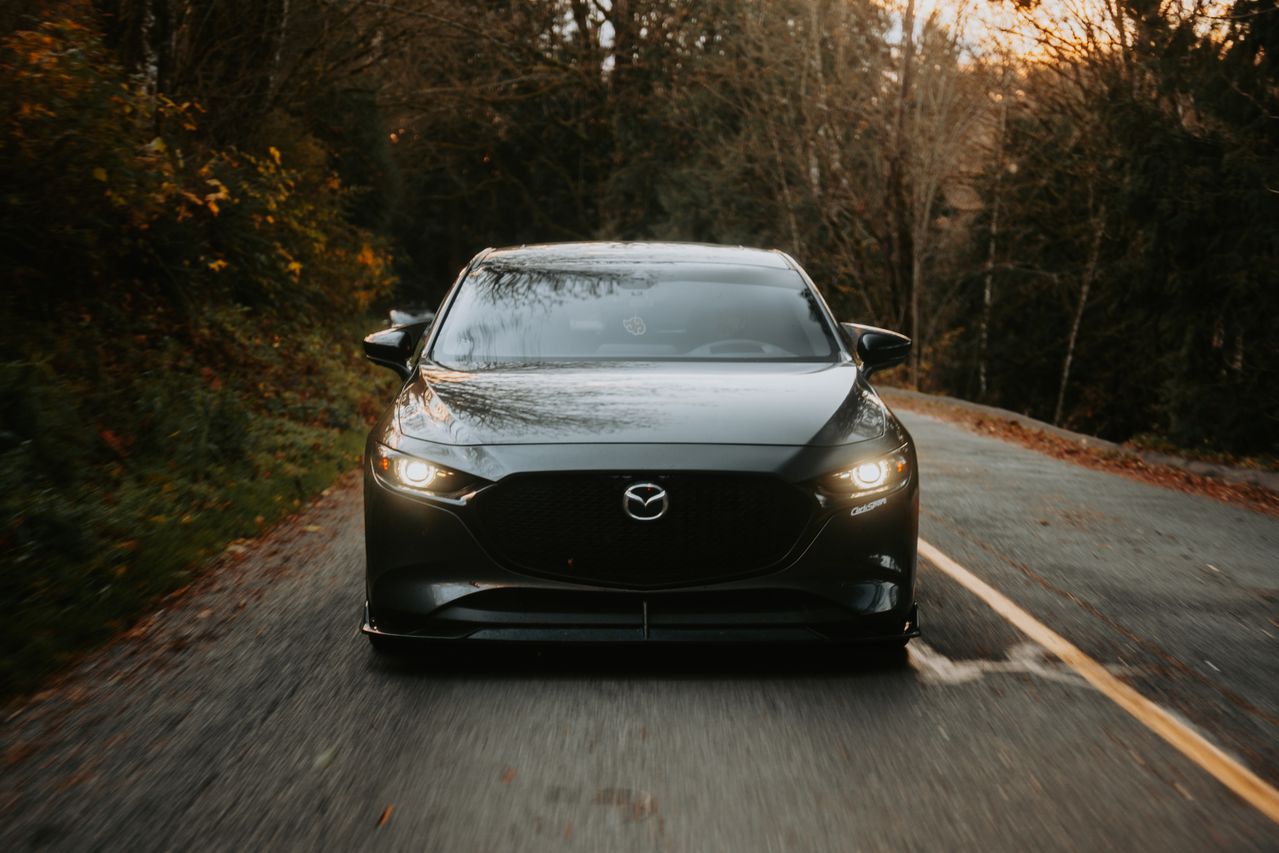
There is something about the Mazda Atenza that makes it stand out in a Kenyan car park. It is not as common as a Toyota Premio or Axio, but when one passes you, it tends to get a second look. The long bonnet, low roofline and sharp body give it a more premium appearance than its price might suggest. Inside, it feels more like a proper executive sedan than the small Japanese imports that dominate the Kenyan used-car market.
And yet, the Atenza is not an expensive car by today’s standards. Depending on the year, engine, mileage and condition, you can find older units well below KSh 2 million. Current Kenyan listings show 2015 Atenzas around KSh 1.45–2.2 million, while 2016–2017 examples commonly fall somewhere around KSh 1.6–2.4 million.
That combination of premium looks, good driving dynamics and relatively accessible pricing is a big part of the Atenza’s appeal. But is it actually a good car to own in Kenya?
The Atenza Feels Different From the Typical Japanese Import
The first thing you notice about the Atenza is that Mazda wasn’t trying to make another small, inexpensive commuter. The third-generation Atenza, sold in Japan as the Mazda Atenza and elsewhere as the Mazda6, was designed around Mazda’s Skyactiv technology and the company’s philosophy of making the driver feel more connected to the car.
It is a larger car than the Axio, Fielder or Vitz, and that shows on the road. The suspension, steering and overall driving position give it a more planted feeling, particularly when you’re driving at highway speeds.
Mazda itself emphasised the Atenza’s high-speed stability and handling when the third generation was launched, while its Skyactiv-Drive six-speed automatic was designed to provide quick, smooth shifts. That makes the Atenza particularly appealing to someone who actually enjoys driving. It doesn’t feel like you’re simply operating a machine to get from one traffic light to another.
Which Engine Should You Buy?
This is where the Atenza gets interesting and where Kenyan buyers need to pay attention. The cars commonly found here include 2.0-litre petrol, 2.5-litre petrol and 2.2-litre diesel versions. Current Kenyan listings show both the 2.0 petrol and 2.2 diesel in significant numbers.
The 2.0-litre Skyactiv-G is probably the easiest starting point for a buyer who wants a petrol Atenza. It produces around 155 horsepower in the Japanese-market version and is paired with Mazda’s six-speed automatic in the common specification. Current Kenyan listings specifically identify 2016 2.0-litre examples with the Skyactiv-G engine and 155 hp.
The 2.5-litre petrol gives you more performance and is attractive if you don’t mind the additional fuel consumption. Then there is the 2.2-litre Skyactiv-D diesel. This is the engine that gives the Atenza a completely different character. Mazda’s 2.2-litre diesel produces strong low-end torque, and later versions were rated at up to 190 PS and 450 Nm.
For highway driving, overtaking and carrying passengers, that torque is impressive. But I would be more selective when buying the diesel second-hand. A diesel Atenza needs to have been properly maintained, and you want to know how it was used before you buy it. A car that spent years doing short urban trips is a different proposition from one that regularly covered longer distances.
The Diesel Is Powerful, But Don’t Buy It Blindly
The 2.2 diesel is one of the most attractive things about the Atenza and also one of the reasons I wouldn’t recommend buying one without a proper inspection. The engine uses modern diesel technology, including emissions-control equipment that needs to be in good condition.
Mazda specifies the appropriate diesel fuel standard and warns against using unsuitable fuel or adding unapproved fuel-system additives. This matters because a used diesel with a questionable history can turn into an expensive project.
You want to know whether the engine has been properly serviced, whether the emissions system is healthy and whether there are signs of excessive oil consumption, smoke or other mechanical problems.
If the seller tells you, “It’s a Mazda diesel, these engines are like that,” don’t accept that as an explanation for a warning light, rough running or unusual smoke. Have it checked.
What Is It Like on Kenyan Roads?
The Atenza is primarily a road car, and that’s where it is happiest. Its relatively low stance and long body give it good stability and a planted feel on highways. On a good road, it is one of the more enjoyable Japanese cars in this price range.
But Kenya has a way of reminding you that not every road is good. The Atenza isn’t the car I’d choose if most of your driving involves badly damaged roads, deep potholes or rough rural tracks. Its size and relatively low profile require more care than something like a crossover.
That doesn’t mean it cannot handle Kenyan roads. It simply means you need to know your roads. For Nairobi commuting, highways and reasonably maintained roads, the Atenza is perfectly at home. On rougher roads, you need to slow down and take care of the suspension and wheels.
The Interior Is One of Its Strongest Points
This is another reason people move towards the Atenza. The cabin feels more mature than that of many Japanese imports around the same price.
Depending on the grade, you can find features such as leather upholstery, Mazda Connect, Bose audio, advanced safety equipment, parking sensors and other premium touches. Mazda’s Japanese specifications show how much equipment varied between grades, with higher versions receiving features such as Nappa leather and Bose audio.
That means you shouldn’t assume every Atenza has the same equipment. A high-grade Atenza can feel genuinely premium, while a basic specification can be considerably more ordinary. Again, know the exact grade before comparing prices.
Fuel Economy Is Good, But Don’t Expect Hybrid Numbers
The Atenza’s Skyactiv engines were designed with efficiency in mind. When the third-generation model was launched, Mazda quoted Japanese JC08 figures of 17.4 km/L for the 2.0 petrol, 15.6 km/L for the 2.5 petrol and up to 20.0 km/L for the 2.2 diesel with the six-speed automatic. Those are laboratory test figures, not promises of what you will see every day in Nairobi traffic.
Real-world consumption will depend on traffic, driving style, vehicle condition, tyre pressure and how much time the engine spends idling. The diesel should generally be more economical on longer journeys, while the 2.0 petrol offers a simpler proposition for someone whose driving is mostly urban.
If your priority is simply the lowest possible fuel bill, however, a small hybrid will make more sense than an Atenza. The Atenza’s appeal is broader than fuel economy.
Is the Atenza Expensive to Maintain?
This is probably the biggest question for a Kenyan buyer considering one. The answer is: it depends on which Atenza you buy. Routine maintenance isn’t necessarily frighteningly expensive, but the Atenza is not as mechanically familiar to the average Kenyan mechanic as a Toyota Axio, Premio or Fielder.
Parts are available, and there is a growing ecosystem around Mazda in Kenya. But some specialised components can cost more than what Toyota owners are accustomed to paying.
The bigger concern is buying a neglected car. A cheap Atenza with worn suspension, transmission problems or a poorly maintained diesel engine can quickly become much more expensive than a slightly pricier example that has been properly looked after. That is why the Atenza rewards buyers who inspect before buying.
What About Resale Value?
This is where Toyota has the advantage. The Atenza has a following in Kenya, but it doesn’t have the same enormous resale market as the most popular Toyotas. That doesn’t mean it is difficult to sell. It simply means you may have to find the right buyer, and the price needs to make sense.
This is actually one of the reasons an Atenza can be attractive to a buyer in the first place. You may be able to get a considerably more sophisticated and enjoyable car for the money because you’re not paying the same Toyota premium.
Current Kenyan listings show just how broad the market can be: dealer data currently puts the typical Atenza asking price at around KSh 2.54 million across 2014–2020 units, while individual 2015–2017 cars can be advertised considerably below that depending on condition and whether they are locally or foreign used.
So, Should You Buy a Mazda Atenza?
I would say yes, especially if you understand what you’re buying. The Atenza is not the obvious choice for someone who wants the simplest possible car to maintain and sell. If that’s your priority, there are easier options.
But if you want something that looks more expensive than it is, drives well, has a quality interior and gives you a choice of capable Skyactiv engines, the Atenza makes a very convincing case.
The 2.0 petrol is the version I’d recommend to the buyer who wants a relatively straightforward daily car. The 2.2 diesel is attractive to someone who does plenty of highway driving and wants strong torque, but I’d insist on a thorough mechanical inspection and a convincing maintenance history.
And whichever engine you choose, don’t buy based on appearance alone. A beautiful Atenza with a questionable history is still a questionable car.