

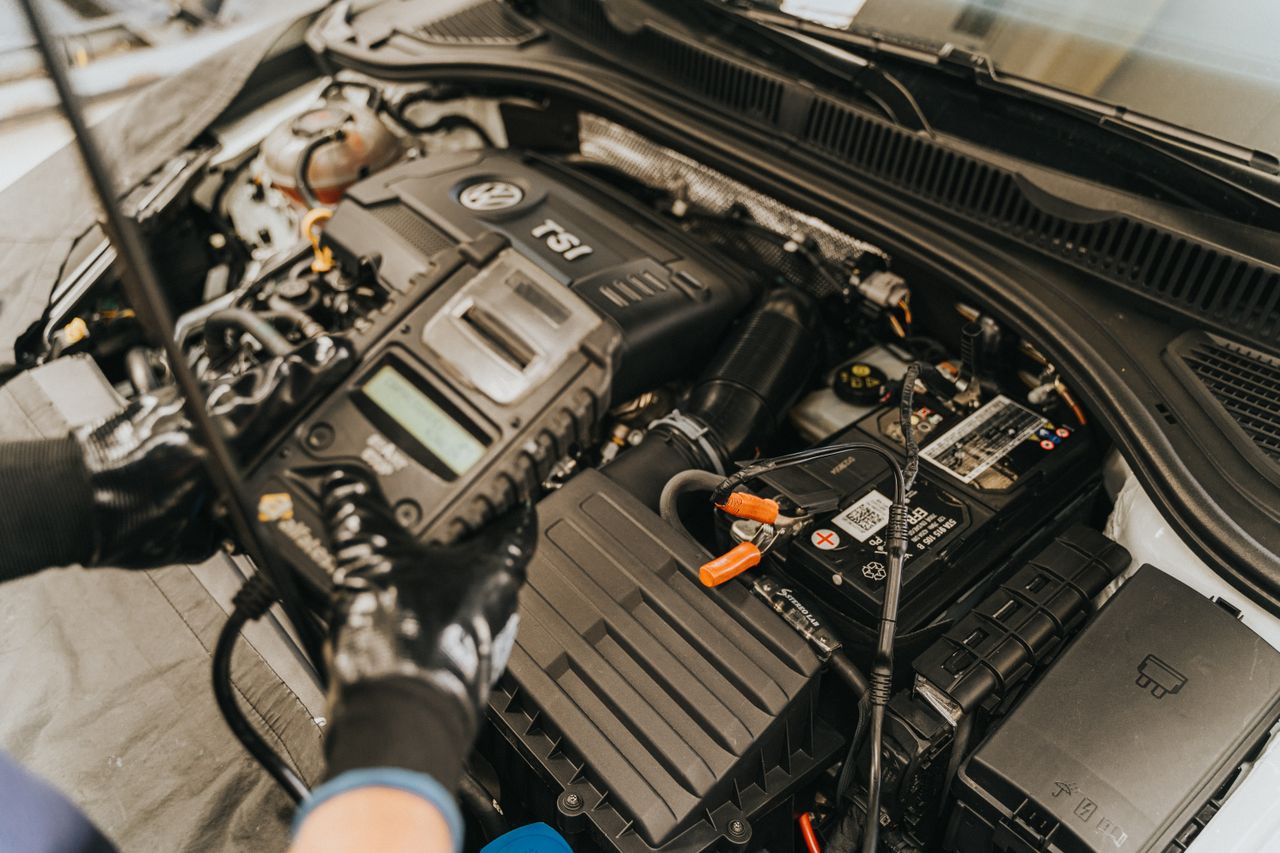
A car battery does more than start the engine. It supplies electrical power to various systems, supports the vehicle’s electronics and helps stabilise the electrical supply. When the battery becomes weak, the effects may extend beyond difficulty starting the car.
You might notice flickering dashboard lights, malfunctioning electronic features, warning messages or an infotainment system that keeps restarting. In modern vehicles, which depend heavily on electronic control systems, a weak battery can sometimes create symptoms that appear to indicate much bigger problems.
But can a failing battery actually damage other electrical components, or does it simply interfere with their operation?
When you turn the ignition on, the battery supplies the electricity needed to start the engine and power various electrical systems. Once the engine is running, the alternator takes over most of the electrical load and recharges the battery.
A healthy battery also helps maintain stable voltage within the vehicle’s electrical system. When it becomes weak, it may struggle to provide sufficient power during engine starting or when several electrical systems are operating.
One of the first signs is often slow engine cranking. Instead of starting immediately, the engine may turn over sluggishly before eventually starting. If the battery deteriorates further, it may not have enough power to start the vehicle at all.
You may also notice dashboard lights flickering, warning indicators appearing unexpectedly or electronic systems behaving inconsistently. Some vehicles may temporarily disable features such as automatic start-stop when battery charge or health falls below the required level.
The infotainment system may also restart, lose settings or switch off during starting. Electric windows, central locking and other powered accessories can sometimes operate more slowly when voltage is low.
These symptoms are not proof that the battery is responsible. Loose battery terminals, poor earth connections, a failing alternator or damaged wiring can produce similar problems.
Can a weak battery therefor damage other components? This is where an important distinction needs to be made. A weak battery does not automatically damage the vehicle’s electronics. In many cases, it simply fails to supply the voltage needed for reliable operation.
However, repeated low-voltage conditions can cause electronic modules to reset, generate fault codes or temporarily stop certain functions. Modern vehicles have several control modules communicating with one another, and unstable voltage can interfere with their operation.
For example, you may see ABS, traction control or airbag warning lights after a difficult start. Sometimes these warnings disappear once the battery has been properly charged and the vehicle’s systems have been checked. If they remain, the underlying fault needs investigation rather than being attributed to the battery.
It is also worth understanding that an alternator and battery work together. A failing alternator may leave the battery undercharged, while a weak battery can place additional demands on the charging system. Replacing the battery without checking the alternator may therefore fail to solve the problem.
The battery itself is not necessarily the cause of every electrical fault. Poor connections, corrosion around the terminals and faulty grounding can also interfere with power delivery.
How to know when your battery needs attention
A battery that struggles to start the engine, repeatedly loses charge or requires frequent jump-starting should be tested. Other signs include dimming lights during starting, electrical accessories behaving inconsistently and a battery warning light appearing on the dashboard.
However, the battery warning light often indicates a charging-system problem rather than simply an ageing battery. It can point to a faulty alternator, damaged wiring or a problem with the charging circuit.
Have a mechanic perform a battery health and load test, check the charging voltage and inspect the terminals and connections. A simple voltage reading alone may not reveal the battery’s actual ability to deliver power under load.
Also, remember that batteries have a limited service life. Heat, repeated deep discharging, driving habits and the vehicle’s electrical demands can affect how long they last. If your car has an automatic start-stop system, confirm that the replacement battery is the correct type and specification. Some vehicles require EFB or AGM batteries rather than conventional lead-acid units.
If your car begins displaying several electrical problems at once, have the battery and charging system checked. Addressing a weak battery early can save you from unnecessary troubleshooting and unexpected breakdowns.