


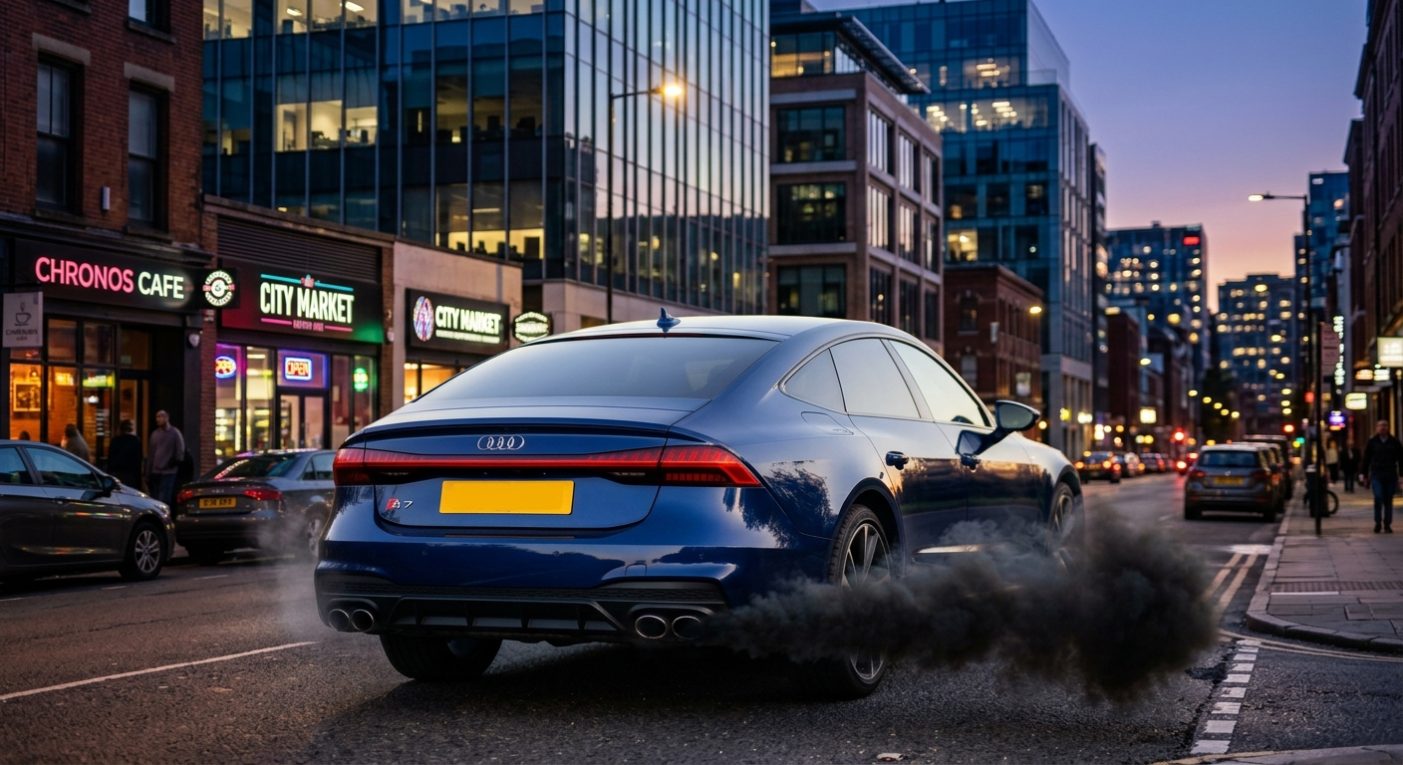
If your car suddenly starts producing black smoke from the exhaust, it is usually telling you that something is wrong with the way the engine is burning fuel.
Black smoke generally points to incomplete combustion. In simple terms, the engine is getting more fuel than it can burn properly, or it is not getting enough air to burn that fuel efficiently. The result is soot and other combustion by-products leaving the exhaust instead of a relatively clean exhaust stream.
This is particularly noticeable on diesel vehicles, where a brief puff of dark smoke under heavy acceleration may occur on some older engines. But thick or persistent black smoke is not something to dismiss as normal. It can indicate a problem with the air intake, fuel system, turbocharger or engine management.
One of the simplest things to check is the air filter. The engine needs a steady supply of air for combustion, and a clogged filter restricts that airflow. With less air available, the fuel-air mixture becomes too rich and combustion becomes less complete, potentially producing black smoke. A dirty air filter can also contribute to poor fuel economy and reduced engine performance.
This is particularly worth checking on cars driven regularly in dusty environments or on unpaved roads, which are common conditions in Kenya. An air filter that looks acceptable from the outside can still be heavily restricted, so it should be inspected according to the manufacturer’s service requirements.
Another common culprit is the fuel injection system. Modern engines rely on injectors to deliver precisely controlled quantities of fuel. If an injector is leaking, worn or delivering fuel incorrectly, the engine may receive more fuel than it can burn properly. The result can be black smoke, increased fuel consumption, rough running or loss of power.
Diesel engines can also produce black smoke when there is a problem with turbocharger or intake airflow. A turbocharger forces additional air into the engine so that it can burn more fuel efficiently. If the turbo is not producing the required boost, or there is a problem somewhere in the intake or intercooler system, the engine may end up with too much fuel relative to the available air. Black smoke may then become particularly obvious when accelerating or climbing a hill.
This is one reason black smoke accompanied by loss of power deserves attention. The smoke and lack of power may be symptoms of the same underlying problem rather than two separate faults.
Other possibilities include a faulty fuel-pressure regulator, incorrect injection timing, a malfunctioning sensor or a restricted intake system. On older diesel engines, incorrect fuel-pump settings can also cause over-fuelling. In some cases, poor-quality or contaminated fuel can contribute to injection-system problems.
The pattern of the smoke can provide useful clues. A small puff when you suddenly accelerate is different from a vehicle that produces a thick black cloud every time you press the accelerator. Persistent smoke, especially when accompanied by poor acceleration, rough running, unusual engine noises or a check-engine light, warrants a proper diagnosis rather than simply replacing parts one by one.
It is also important not to confuse black smoke with blue or white smoke. Blue smoke generally points towards the engine burning oil, while white smoke can have several causes, including coolant entering the combustion chamber or fuel failing to burn properly. Smoke colour does not provide a complete diagnosis, but it is a useful starting clue.
For a Kenyan driver, there is another reason not to ignore a persistently smoky vehicle because, vehicle emissions are regulated. Kenya’s environmental framework requires vehicle emissions to comply with prescribed standards, while emission testing procedures cover both petrol and diesel vehicles. NEMA’s current guidance also provides for emission testing and the use of tailpipe measurements and onboard diagnostics for applicable vehicles.
So, what should you do if your car starts producing black smoke? Start with the basics. Check the air filter and service history, then have the vehicle properly scanned and inspected if the smoke persists. A competent mechanic should be able to assess the fuel injectors, fuel pressure, intake system, turbocharger and relevant sensors rather than simply guessing at the cause.
Most importantly, don’t try to solve the problem by simply adding fuel-system additives or changing parts without a diagnosis. Black smoke is a symptom, not a fault by itself. Finding the cause early can mean something as simple as replacing a restricted air filter rather than eventually dealing with a much more expensive engine or fuel-system problem.