

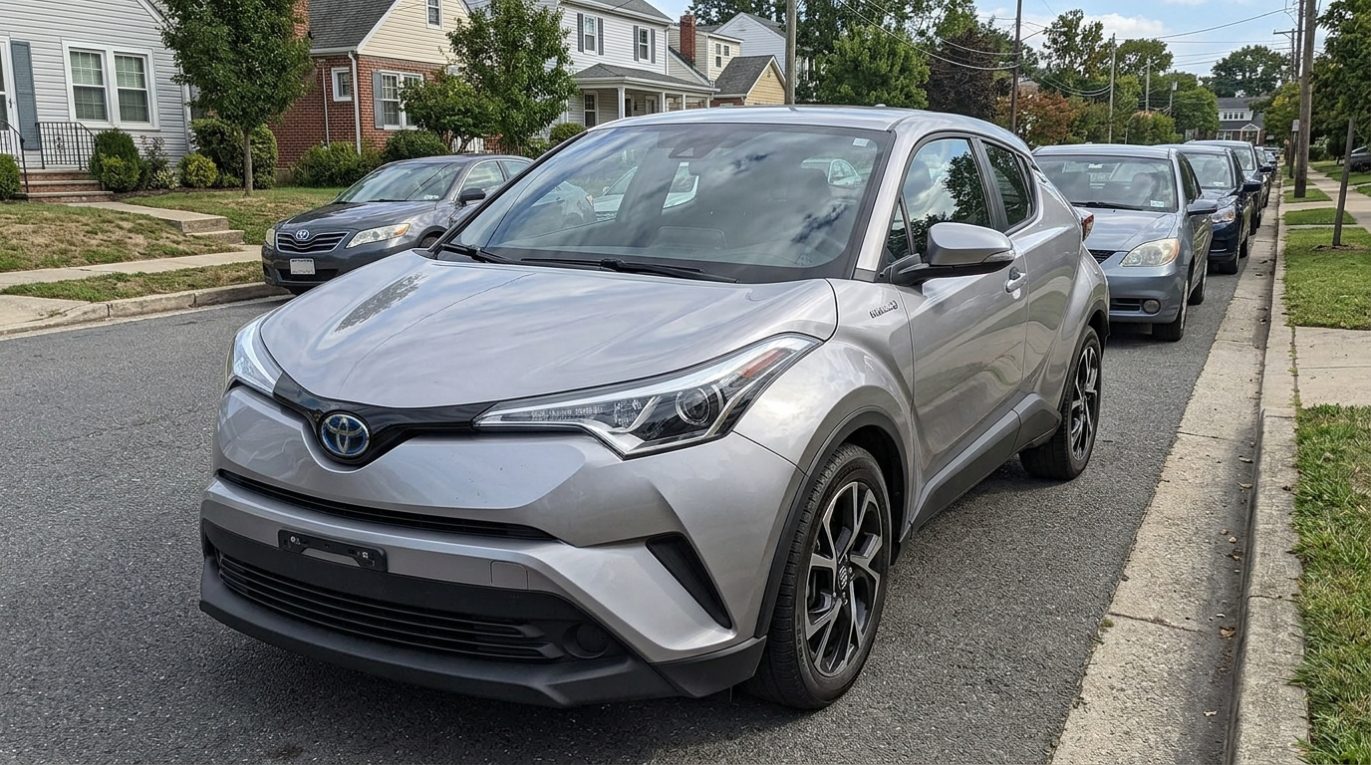
The Toyota C-HR is one of those cars that tends to divide opinion. Some people love its sharp, unconventional styling, while others wonder why Toyota made a small crossover that looks more dramatic than most of its larger SUVs.
But beyond the styling, the C-HR has become an increasingly familiar sight on Kenyan roads, particularly in used-import form.
Most units Kenyan buyers encounter belong to the first-generation C-HR, introduced in 2016 and sold globally through the early 2020s. Japanese-market versions are particularly relevant here, with both petrol and hybrid powertrains available depending on the year and specification.
So, what is the C-HR actually like to own in Kenya? The first thing to understand is that the C-HR is a compact crossover, not a small SUV designed for serious rough-road driving.
It sits higher than a conventional hatchback, gives you a slightly elevated driving position and has a useful amount of ground clearance for ordinary urban driving. But its sporty appearance can create expectations that the car is tougher off-road than it really is.
For Nairobi and other urban environments, however, its size is one of its strengths. It is relatively easy to manoeuvre through traffic and park, while the elevated seating position gives the driver a good view of surrounding traffic. It feels more substantial than a small hatchback without becoming as cumbersome as a large SUV.
The hybrid version is particularly a good choice for Kenyan buyers. Japanese-market C-HR hybrids use Toyota’s 1.8-litre hybrid system, combining a petrol engine with an electric motor and a hybrid battery. The system is related to the technology used in the Prius and other Toyota hybrids, which means Kenyan technicians are increasingly familiar with the basic architecture.
For someone doing a lot of urban driving, the hybrid can be attractive because the system can operate electrically at low loads and recover energy through regenerative braking. That does not mean every C-HR hybrid will automatically deliver spectacular fuel economy. Traffic, driving style, tyre pressure, air conditioning and battery condition all matter.
The petrol versions offer a simpler alternative for buyers who do not want a hybrid. Depending on the market and specification, the first-generation C-HR was offered with engines including Toyota’s 1.2-litre turbocharged petrol and 2.0-litre petrol engines.
The 1.2-litre turbo is an interesting choice because it gives the relatively small crossover enough performance without requiring a large engine. But, as with any turbocharged used import, service history matters.
The hybrid remains the more obvious choice for someone whose priority is urban efficiency, while the petrol versions may appeal to buyers who prefer conventional powertrains.
Inside, the C-HR feels more stylish than many ordinary compact cars. The driving position is good, the dashboard is relatively driver-focused and higher grades can have impressive equipment. But the dramatic exterior design comes with a compromise.
The rear windows are small, and the rising beltline makes the back seats feel darker than you might expect. Rear visibility is also not one of the C-HR’s strongest points. The rear seats are usable for adults, but the C-HR is not the car to buy if your main requirement is maximum family space. The boot is adequate for everyday shopping and luggage, but there are more practical crossovers in this class.
Where the C-HR does impress is on the road. It feels more planted and composed than many small crossovers, with steering and suspension that give it a more confident feel through corners. It is still a comfortable everyday car, but Toyota clearly wanted the C-HR to feel more engaging than a conventional small hatchback.
For Kenyan roads, though, there is one thing buyers should pay attention to: wheel and tyre specification. Some C-HRs come with relatively large wheels and low-profile tyres. They look good, but they provide less protection against the potholes and rough surfaces that are common on Kenyan roads. Before buying one, inspect the tyres and wheels carefully and listen for suspension noises.
Ground clearance should also be considered. The C-HR can comfortably handle normal urban roads, speed bumps and reasonably maintained highways, but it is not a substitute for a RAV4 or other higher-riding SUV when your regular routes involve badly damaged roads.
Then there is resale. The Toyota badge helps, but the C-HR occupies a more specialised part of the market than a Vitz, Axio or RAV4. Buyers are attracted to its styling and hybrid technology, but its smaller rear cabin and less practical shape can narrow the audience compared with a conventional family SUV.
So, is the Toyota C-HR worth buying in Kenya? It can be a very good choice if you want something stylish, compact, economical and more interesting to drive than the average small crossover. The hybrid makes particular sense for someone spending a lot of time in urban traffic, while the petrol versions offer an alternative for buyers who prefer a conventional powertrain.
But it is not the right car for everyone. If your priority is maximum interior space, rough-road ability or carrying a large family, there are more practical options. If you mostly drive around town, want something distinctive and appreciate Toyota’s hybrid technology, then the C-HR is for you.