


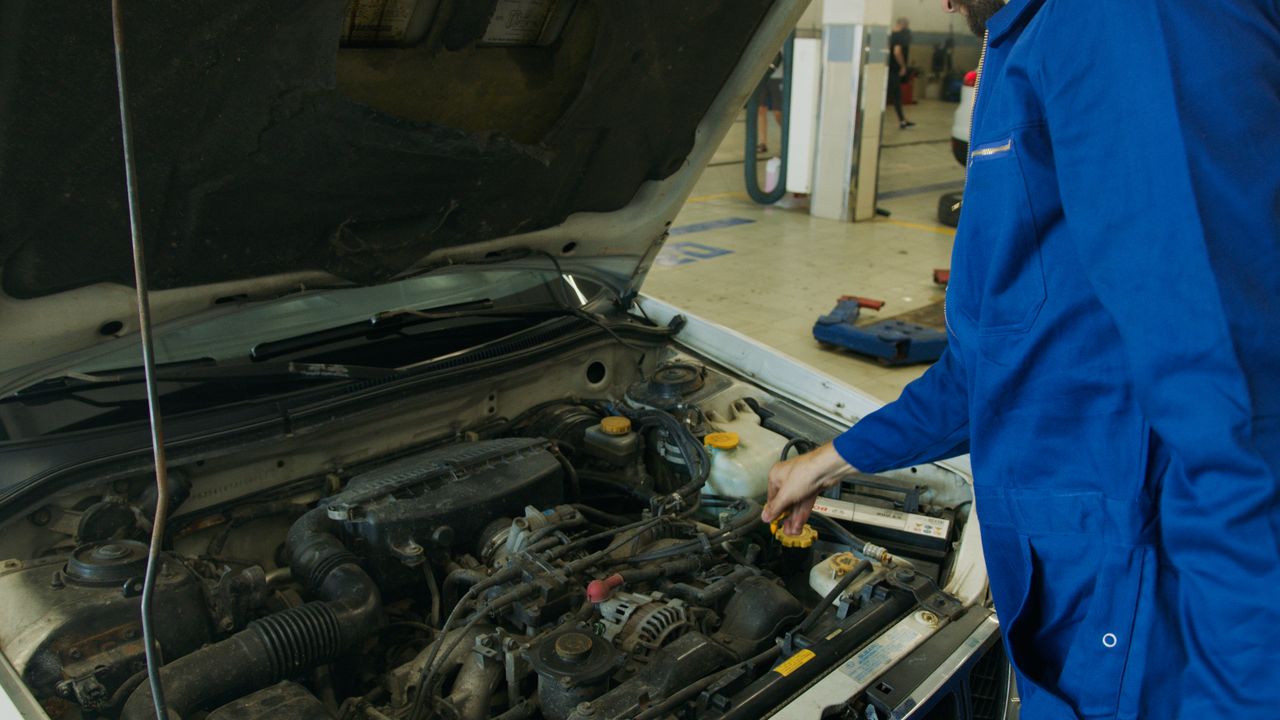
You check the coolant reservoir, top it up, and a few days or weeks later the level has dropped again. It is tempting to assume that the car simply uses coolant as part of normal operation. It does not. Unlike fuel, coolant should circulate through a sealed cooling system and remain there.
A small change in the level between checks can happen as the system operates, but coolant that keeps disappearing needs an explanation. Sometimes the cause is a small external leak. Other times, the coolant is escaping somewhere you cannot easily see. In more serious cases, it can be getting into the engine itself.
One of the simplest causes is a leaking hose or connection. Your car’s cooling system has several rubber hoses, clamps and connections carrying coolant between the engine, radiator and other components. Over time, hoses can become brittle, cracked or loose.
A small leak may not leave a large puddle underneath the car. Coolant can drip onto a hot engine or other components and evaporate before reaching the ground. You may instead notice a sweet smell around the engine bay or after parking the car.
The radiator itself can also leak. Corrosion, physical damage or ageing can create small cracks in the radiator. Plastic components on modern radiators can also deteriorate with age. A leak may become more obvious when the engine is hot because the cooling system is pressurised.
The coolant reservoir is another place worth checking. Cracks in the tank or a damaged cap can allow coolant to escape. The radiator cap, where fitted, also plays an important role in maintaining pressure. If it cannot maintain the correct pressure, coolant can be pushed out of the system.
Then there is the water pump. The water pump circulates coolant through the engine. A failing pump can develop a leak around its seal, sometimes leaving traces of dried coolant around the pump area. In some cars, a water-pump problem can become serious quite quickly because poor coolant circulation can cause the engine to overheat.
This is why repeatedly adding coolant without finding the leak is not a proper repair. The situation becomes more serious if there is no obvious external leak.
One possibility is a head-gasket problem, where coolant is entering the engine’s combustion chambers or mixing with engine oil. This can happen for several reasons, including overheating.
There are several warning signs to watch for. White exhaust smoke that continues after the engine has warmed up, bubbles or unusual pressure in the cooling system, persistent overheating, a milky appearance in the engine oil or unexplained coolant loss can all justify further investigation.
These symptoms do not automatically prove that the head gasket has failed. Other problems can produce similar signs, which is why proper testing is important.
A car can also lose coolant because of a leak inside the cabin. If the heater core is leaking, coolant can enter the vehicle’s interior. You may notice a sweet smell inside the cabin, damp carpets or windows that repeatedly fog up. This is less common than an ordinary hose or radiator leak, but it can be an expensive problem if ignored.
For Kenyan drivers, overheating deserves particular attention. Heavy traffic, high ambient temperatures, long journeys and steep climbs can place additional demands on the cooling system. A cooling system that is already losing coolant may cope under normal conditions but struggle when the engine is working harder.
If the temperature gauge starts moving higher than normal, do not simply keep driving and hope that adding coolant later will solve the problem. An overheating engine can suffer serious damage. And never remove the radiator cap while the engine is hot. The cooling system can be under pressure, and hot coolant can cause severe burns. Allow the engine to cool before inspecting the system.
There is also an important distinction between coolant level dropping slightly and coolant disappearing repeatedly. If you recently had cooling-system work done and the system was refilled, the level may change slightly as trapped air is removed. But if you keep adding coolant every few days or weeks, something is wrong.
Do not make topping up your coolant the maintenance routine. If you notice a leak, have the cooling system pressure-tested. A pressure test can help identify leaks that are difficult to see when the engine is cold. A mechanic can then determine whether the problem is a hose, radiator, water pump, reservoir, cap or something more serious.
And if you have recently bought a used car that keeps losing coolant, don’t assume it is simply an old-car problem. A persistent coolant loss can become one of the most expensive problems to ignore. The cooling system is there to keep the engine at the correct operating temperature. If coolant keeps disappearing, the system is telling you that something is not right.
A coolant top-up can get you moving. It does not fix the reason the coolant is disappearing. Find the leak, diagnose the cause and fix it before a small cooling-system problem becomes an engine problem.