


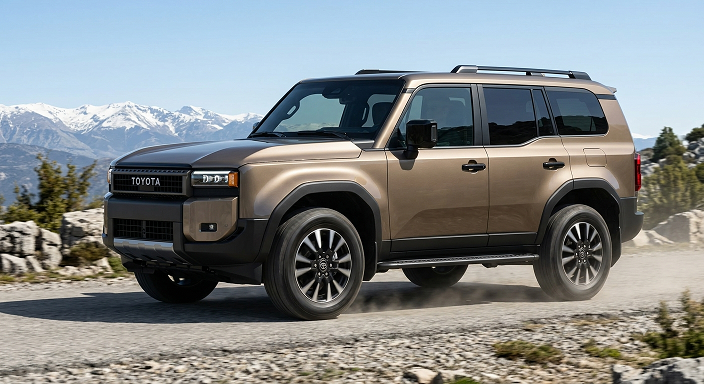
Few vehicles command as much respect on Kenyan roads as the Toyota Land Cruiser Prado. Whether parked outside a corporate office in Nairobi, navigating the rough terrain of northern Kenya, or carrying a family on a cross-country holiday, the Prado has built a reputation that extends far beyond its badge.
For many buyers, owning one represents a significant milestone. It is a vehicle associated with durability, comfort, capability, and strong resale value. Yet buying a used Prado requires careful consideration. While it is one of the most dependable SUVs on the market, it is also one of the most expensive vehicles to maintain if previous owners neglected routine servicing.
Understanding what to look for before making a purchase can save you hundreds of thousands of shillings and years of unnecessary frustration.
One of the Prado’s greatest strengths is its versatility. Unlike many SUVs that perform well either on tarmac or off-road, the Prado is comfortable in both environments. It feels equally at home navigating Nairobi traffic as it does climbing rocky tracks, crossing muddy roads during the rainy season, or travelling long distances across the country. This balance explains why it remains popular among families, businesses, humanitarian organizations, tour operators, and government agencies. For buyers who regularly travel beyond paved roads, few vehicles inspire as much confidence.
Choosing the right Prado, however, begins with understanding the different generations available in Kenya. Older 90 Series models remain common because of their affordability and mechanical simplicity. Many are still in active service despite their age, demonstrating Toyota’s reputation for durability. However, buyers should expect higher maintenance requirements simply because these vehicles are now several decades old.
The 120 Series, produced during the 2000s, remains one of the most sought-after generations in Kenya. Many mechanics regard it as an excellent balance between modern comfort and proven reliability. It introduced improved safety features, a more refined interior, and stronger road manners while maintaining the off-road capability expected from the Prado name.
The 150 Series, first introduced in 2009 and updated several times since, dominates today’s used import market. It offers improved technology, enhanced safety systems, better ride quality, and more modern styling while retaining the characteristics that made earlier Prados successful.
Engine choice is another important decision. Diesel-powered Prados are particularly popular in Kenya because of their strong low-end torque and suitability for long-distance travel and towing. Models equipped with Toyota’s 3.0-litre D-4D engine have earned a reputation for reliability when serviced properly. Later versions featuring the 2.8-litre turbo diesel offer improved refinement and fuel efficiency while maintaining strong performance.
Petrol variants are less common but remain attractive to some buyers. They generally provide quieter operation and smoother acceleration, although they consume noticeably more fuel than comparable diesel models. Buyers who spend most of their time driving within urban areas may appreciate the refinement of petrol engines despite the higher running costs.
Fuel consumption is often one of the first questions prospective owners ask. The answer depends on the engine, driving conditions, traffic, and driving style. Diesel models commonly return between 9 and 12 kilometres per litre under mixed driving conditions, while petrol variants generally consume more fuel. Buyers upgrading from smaller sedans or hatchbacks should recognise that the Prado prioritises capability and comfort rather than fuel economy. Fortunately, many owners consider the additional fuel cost a reasonable trade-off for the vehicle’s versatility.
Inside the cabin, the Prado has always focused on practicality as much as comfort. Even older models offer spacious seating, generous luggage capacity, and excellent visibility. Higher trim levels introduce features such as leather upholstery, electrically adjustable seats, climate control, premium audio systems, sunroofs, adaptive cruise control, and advanced driver assistance technologies.
Families often appreciate the optional third-row seating available on many models, although these seats are generally better suited to children than adults during longer journeys.
One of the Prado’s greatest advantages is its exceptional ride quality. Its suspension is designed to absorb uneven road surfaces while maintaining stability at highway speeds. Whether travelling along well-maintained highways or rough rural roads, passengers generally experience a level of comfort that smaller SUVs struggle to match. This combination of comfort and durability has contributed significantly to the Prado’s enduring popularity in Kenya.
Reliability remains one of its defining characteristics. Properly maintained Prados routinely accumulate hundreds of thousands of kilometres without requiring major engine or transmission repairs. Routine servicing, timely oil changes, quality filters, and genuine replacement parts all contribute to this longevity.
However, reliability should never be taken for granted. A neglected Prado can quickly become an expensive vehicle to own. Suspension components, turbochargers, injectors, cooling systems, and four-wheel-drive components should all be carefully inspected before purchase. Repairs involving these systems can be costly, particularly if genuine parts are required.
Buyers should also pay close attention to the service history. A complete maintenance record often provides greater reassurance than low mileage alone. Vehicles that have received consistent servicing generally offer better long-term reliability than lower-mileage examples with uncertain maintenance histories.
Imported vehicles should also undergo comprehensive pre-purchase inspections. An experienced mechanic should examine the engine, transmission, suspension, braking system, steering components, electronic systems, differential operation, four-wheel-drive engagement, and evidence of previous accident repairs. Import records, auction sheets where available, and mileage verification can further reduce the risk of purchasing a problematic vehicle.
Running costs deserve realistic consideration. Although the Prado enjoys excellent spare parts availability throughout Kenya, replacement components naturally cost more than those for smaller passenger cars. Tyres, suspension parts, insurance premiums, servicing, and fuel all require larger budgets. Buyers should therefore evaluate ownership costs rather than focusing solely on the purchase price.
Fortunately, the Prado offers one important financial advantage: resale value. Few SUVs in Kenya retain their value as consistently. Demand remains strong across both urban and rural markets, meaning well-maintained examples often depreciate more slowly than many competing vehicles. This strong resale performance partly offsets the higher cost of ownership over time.
The Prado is not the ideal vehicle for everyone. Motorists whose primary concern is fuel economy may find smaller SUVs or hybrid vehicles more suitable. Likewise, buyers who spend almost all their time commuting short distances within cities may not fully utilise the Prado’s capabilities.
However, for families requiring space, professionals travelling extensively across the country, businesses operating in demanding environments, or buyers seeking a dependable long-term SUV, the Prado continues to justify its reputation.
Its popularity in Kenya has never been built on appearance alone. Instead, it reflects decades of proven performance under conditions that test vehicles every day. From city streets to remote rural roads, the Prado has repeatedly demonstrated why it remains one of the country’s most respected four-wheel-drive vehicles.
Before making your purchase, compare several examples rather than rushing into the first attractive deal. Verify ownership documents, inspect service records, confirm mileage, and always invest in an independent mechanical inspection. The time and money spent during the buying process can prevent costly repairs later.
Buying a vehicle is one of the biggest financial decisions many people make, and good decisions are rarely based on price alone. Understanding a vehicle’s strengths, weaknesses, ownership costs, reliability, and long-term value is just as important as negotiating the purchase price. That is why Iko Gari exists, to help Kenyan motorists buy smarter through practical, well-researched, and locally relevant automotive content.