


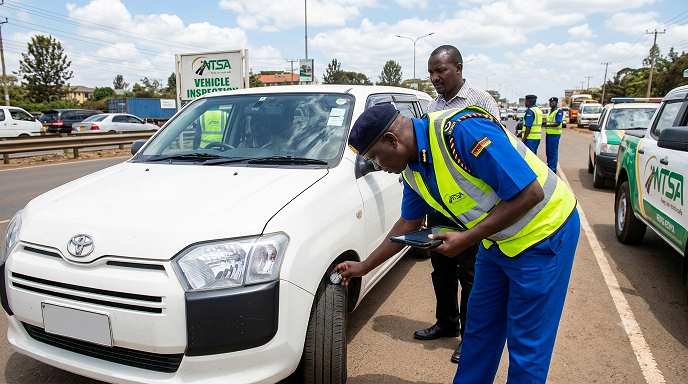
Kenya’s new motor vehicle inspection rules have generated considerable confusion among private car owners. When the regulations were first publicised, many motorists understood that all private vehicles more than four years old would be required to undergo annual roadworthiness inspections beginning on July 1, 2026. This raised immediate questions about inspection fees, testing centres, penalties, and whether millions of private vehicles would suddenly need inspection certificates.
The situation has since changed. Although the Traffic (Motor Vehicle Inspection) Rules, 2026 introduced a wider framework for vehicle inspections, the National Transport and Safety Authority later clarified that mandatory enforcement would not immediately extend to ordinary private vehicles. The Authority indicated that enforcement would continue for vehicle categories whose inspections are already linked to licensing requirements, including public service and commercial vehicles.
For the average private motorist, the most important point is therefore straightforward: owners should not assume that every private car more than four years old must immediately be taken for annual inspection. However, the wider inspection framework remains important because it signals a possible long-term change in how vehicle roadworthiness is managed in Kenya.
The new rules were introduced under the Traffic Act and were scheduled to come into operation on July 1, 2026. Their broader objective is to improve road safety by identifying vehicles with mechanical defects before those defects contribute to accidents, breakdowns, or other risks on public roads.
Kenya has traditionally required regular inspections mainly for public service vehicles, commercial vehicles, school transport vehicles, and other categories whose operating licences depend on proof of roadworthiness. Many ordinary private cars, however, have remained on the road for years without undergoing routine mechanical inspections unless inspection was required for a specific administrative or legal reason.
The proposed expansion to older private vehicles would have represented a significant shift. Under the new framework, vehicles more than four years old were expected to undergo annual inspection. New vehicles would generally be inspected before registration, while imported used vehicles would also be subject to inspection requirements before being registered for use in Kenya.
The reasoning behind periodic inspection is not difficult to understand. Vehicles naturally experience wear as they age. Brake pads become thinner, suspension components weaken, tyres lose tread, steering systems develop play, and lights or safety equipment may stop functioning correctly. Some faults develop gradually and may not be obvious during normal driving. A driver can become accustomed to a vehicle’s declining condition without realising how much its braking, steering, or stability has deteriorated.
Regular inspection is intended to provide an independent assessment of whether a vehicle remains mechanically safe to operate. The purpose is not simply to confirm that the engine starts or that the car can move. A roadworthiness inspection considers systems that directly affect the safety of the driver, passengers, and other road users.
Braking systems are among the most important areas examined during vehicle inspections. A car may appear to brake normally during everyday driving while having uneven braking force between its wheels. Worn brake pads, damaged discs, leaking brake fluid, or faults within the braking system can increase stopping distances and reduce control during emergencies.
Tyres are another major safety concern. Inspectors may examine tyre condition, tread depth, visible damage, and whether the tyres are suitable for continued use. Worn tyres reduce grip, particularly on wet roads, while damaged sidewalls increase the risk of sudden tyre failure. Tyre condition is particularly important during Kenya’s rainy seasons, when standing water and slippery road surfaces increase the risk of skidding.
Steering and suspension systems may also form part of the inspection process. Worn ball joints, tie-rod ends, shock absorbers, wheel bearings, and suspension bushes can affect vehicle stability and handling. Some of these problems begin with minor noises or vibrations but become more serious if repairs are repeatedly postponed.
Lighting systems are equally important. Headlights, brake lights, indicators, reverse lights, number-plate lights, and hazard lights allow drivers to see and communicate their intentions to other road users. A failed brake light may seem like a small defect, but it can significantly increase the risk of a rear-end collision.
Other areas that may be examined include seat belts, windscreens, mirrors, wipers, vehicle identification details, chassis condition, exhaust systems, and safety equipment. The exact inspection process depends on the vehicle category and the technical standards applied.
One of the most significant changes under the new framework is the planned involvement of privately operated vehicle inspection centres. Historically, limited inspection capacity has contributed to long queues and inconvenience at government inspection centres. Expanding the number of authorised facilities could make inspections more accessible if the system is eventually applied more widely. Private centres would not operate without oversight. They would require approval and licensing, while NTSA would retain responsibility for regulation, quality control, compliance monitoring, and certification.
For motorists, wider access could reduce travel distances and waiting times. However, it also raises important questions about consistency. A reliable inspection system should produce similar results regardless of where a vehicle is tested. Motorists will expect clear standards, properly calibrated equipment, qualified inspectors, and transparent procedures for challenging inaccurate or disputed results.
The cost of inspection has also attracted public attention. Vehicle owners are concerned not only about the inspection fee itself but also about the cost of repairing defects identified during testing. For some motorists, replacing worn tyres, suspension components, brakes, or other safety-related parts could require significant expenditure.
However, mechanical defects do not become less dangerous simply because they are expensive to repair. A worn steering component or ineffective braking system presents the same risk whether it is discovered during an inspection or after a vehicle loses control. The more important question is whether the inspection system is implemented fairly, transparently, and without creating unnecessary administrative burdens.
The proposed annual inspection requirement for private vehicles has also faced legal challenges. Petitions filed in court have questioned aspects of the rules, including the process through which they were introduced and whether there was adequate public participation. These legal proceedings have contributed to uncertainty over how and when the requirements affecting private motorists may be enforced. NTSA’s subsequent clarification eased immediate concerns by indicating that mandatory enforcement would be deferred for ordinary private vehicles.
Commercial vehicles, public service vehicles, and other categories whose inspections are tied to licensing requirements remain in a different position. Operators in these categories should continue complying with the inspection obligations that apply to their vehicles. Private motorists should therefore avoid treating information about all vehicle categories as though it applies equally to every car. A matatu, school bus, commercial truck, taxi, and privately owned family car may be subject to different inspection and licensing requirements. The applicable rules depend on how a vehicle is registered and used.
Motorists should also be cautious about misleading messages circulating online. Periods of regulatory change often create opportunities for fraud. Vehicle owners should not make payments to individuals claiming they can issue inspection certificates outside authorised systems. Official information should be obtained through NTSA and recognised government platforms.
Even with mandatory enforcement deferred, the discussion around vehicle inspections raises an important issue: many cars are driven until a mechanical problem becomes impossible to ignore. Some motorists only visit a garage after warning lights appear, the suspension becomes noisy, the engine overheats, or the vehicle begins pulling to one side. By then, a relatively small problem may have developed into a more expensive repair.
Regular preventive maintenance remains one of the most effective ways to keep a vehicle safe and reduce long-term ownership costs. Drivers should periodically check tyre condition and pressure, brake performance, steering response, suspension noises, lights, fluid levels, seat belts, windscreen visibility, and unusual dashboard warnings. A professional inspection before a long journey can also identify problems that routine servicing may overlook.
Vehicle owners should not confuse routine servicing with a complete roadworthiness inspection. An oil change mainly protects the engine. It does not automatically confirm that the brakes are balanced, the tyres are safe, the steering components are secure, or the suspension is functioning correctly. A vehicle can have fresh engine oil and still be unsafe to drive.
The debate over private vehicle inspections is likely to continue as legal questions are addressed and authorities expand inspection capacity. Future announcements may clarify whether annual inspections for private vehicles will be introduced, when enforcement could begin, what fees will apply, how inspections will be booked, and which vehicles will be affected. Until then, private car owners should rely on official communication rather than assume that every earlier announcement remains unchanged.
At Iko Gari, our role is to help motorists understand automotive developments without turning uncertainty into alarm. New rules can affect the cost and responsibility of vehicle ownership, but readers deserve a clear distinction between what regulations provide, what authorities are currently enforcing, and what remains subject to legal or administrative developments. For now, the position is clear, Kenya has introduced a broader vehicle inspection framework, but mandatory annual inspection enforcement for ordinary private vehicles has been deferred. Commercial, public service, and other vehicles whose inspections are linked to licensing remain subject to their applicable requirements.