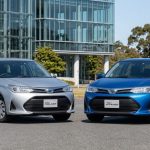




The Mazda CX-5 is one of the more attractive SUVs on Kenya’s used-car market. It looks good, drives well and offers impressive fuel economy, particularly in diesel form. Yet a question has been circulating among motorists: why do some owners seem eager to sell their diesel CX-5s after a relatively short period of ownership?
The answer is not that every diesel CX-5 is problematic. Rather, the 2.2-litre Skyactiv-D engine has particular maintenance requirements that can make ownership expensive when things go wrong.
One of the biggest concerns is the diesel particulate filter (DPF). This component captures soot from the exhaust and periodically burns it off through a process called regeneration. Mazda’s own guidance warns that repeated short journeys, prolonged idling and continuous low-speed driving can prevent the filter from clearing soot effectively.
That matters in Kenya, where many vehicles spend hours in stop-and-go Nairobi traffic or make frequent short trips. When regeneration is repeatedly interrupted, soot can accumulate, potentially triggering warning lights, restricting performance and requiring specialist attention.
A related concern is engine oil dilution. During certain DPF regeneration cycles, extra diesel is injected into the engine. Some fuel can find its way into the engine oil, causing the oil level to rise and reducing its ability to protect engine components. This problem has been documented in some earlier 2.2-litre Skyactiv-D models.

For an owner who discovers the problem only after warning lights appear or performance deteriorates, the experience can quickly become frustrating. Repairs involving the emissions system, injectors, turbocharger or engine can also be costly, particularly when the vehicle has an incomplete service history.
The second issue is that diesel ownership does not suit every driving pattern. Diesel engines can be excellent for people who regularly cover long distances, benefit from strong pulling power and maintain their vehicles properly. But someone who mainly drives short distances around town may not get the same benefits. A petrol CX-5 can be a more straightforward choice for that kind of use.
There is also the question of what happens when a used vehicle changes hands. A buyer may purchase an imported diesel CX-5 because it is affordable, economical and well equipped, without knowing how it was maintained in Japan or whether it has developed underlying problems. A car can drive perfectly during a brief test drive yet still have stored fault codes or an emissions-system issue that needs investigation.
None of this proves that diesel CX-5 owners generally sell their cars sooner than petrol owners. Establishing that would require reliable data on ownership periods and resale patterns. Social media observations alone cannot establish how widespread the problem is.
So, should you avoid the diesel CX-5 altogether? Not necessarily. A well-maintained unit with a verifiable service history, a healthy emissions system and a clean diagnostic report can still make sense, especially for someone who regularly drives longer distances. However, buyers should have the engine, DPF, injectors, turbocharger and oil condition checked by a mechanic familiar with Mazda’s Skyactiv-D engines before committing.
For predominantly urban driving, the petrol CX-5 may be the less stressful option. The key is to look beyond the purchase price and advertised fuel economy. The real lesson is that a car can be economical at the pump but expensive to own if its engine and your driving habits are a poor match.