

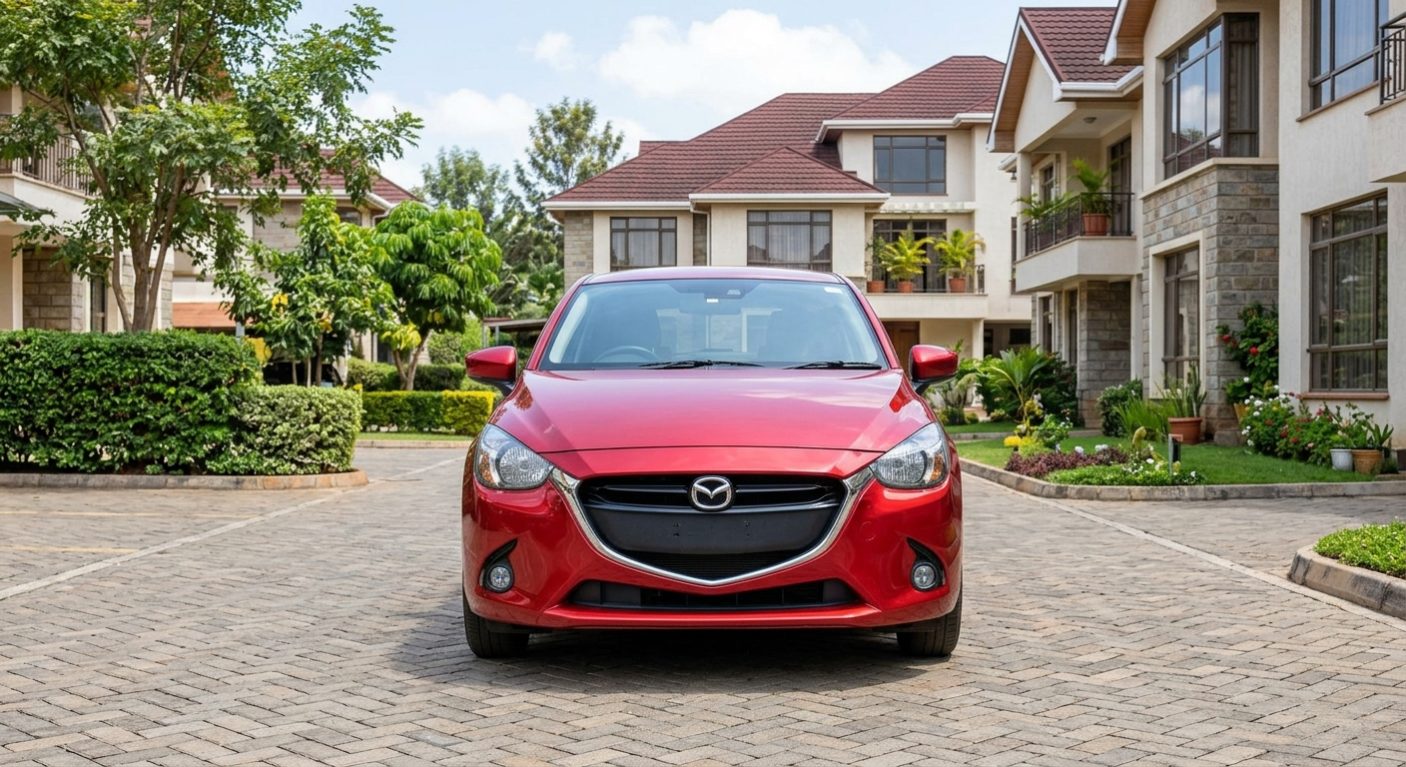
If you have been shopping for a Mazda Demio in Kenya, you may have come across another name: Mazda2. Some sellers use the two names interchangeably, while others list them as though they are completely different cars.
This can leave buyers wondering whether the Mazda2 is a newer version of the Demio, a different model altogether or simply another name for the same vehicle.
The answer is that they are essentially the same model, but the name and specifications depend on the market in which the car was originally sold.
Why does Mazda use two names?
The Mazda Demio name was primarily used in Japan, where the model was introduced in 1996. In many international markets, Mazda sold the same model under the Mazda2 name.
This naming arrangement continued across several generations. The cars share the same basic design and engineering, although equipment, engine choices and other specifications can differ between markets.
For Kenyan buyers, this distinction matters because many used Mazda vehicles are imported from Japan. A car advertised locally as a Demio may be closely related to a Mazda2 sold in Europe or another international market.
It is therefore not accurate to assume that the Mazda2 is automatically a different or more advanced vehicle simply because it carries a different badge.
What about the different generations?
The naming difference becomes easier to understand when you look at the model’s development.
The first-generation Demio, introduced in 1996, established the model as a practical compact hatchback. Its relatively tall body and flexible interior made it useful for everyday family transport.
The second generation followed in 2002, with a more conventional hatchback design. The third generation arrived in 2007, bringing a sportier appearance and a more modern interior.
The fourth generation, introduced in 2014, is particularly relevant to Kenyan buyers. It was sold in Japan as the Mazda Demio and in many other markets as the Mazda2. It introduced Mazda’s Skyactiv technology, with improvements in engine efficiency, vehicle weight and driving dynamics.
In 2019, Mazda updated the model and eventually dropped the Demio name in Japan, adopting Mazda2 instead. This means that later Japanese-market units also carry the Mazda2 badge.
The transition does not mean that the Mazda2 suddenly became an entirely new model. It was largely a continuation of the same model line under a unified name.
Are the specifications exactly the same?
Not necessarily. This is where buyers need to pay attention. The Japanese-market Demio and international Mazda2 can have different engine options, transmission combinations, trim levels and safety equipment.
For example, the fourth-generation Japanese Demio was available with 1.3-litre and 1.5-litre petrol engines, as well as a 1.5-litre Skyactiv-D diesel in selected versions. International Mazda2 models had different engine offerings depending on the country.
Even where two vehicles share the same engine family, their output, emissions equipment and available features may differ.
Equipment can also vary. Some versions come with advanced safety features, infotainment systems, steering-wheel controls and automatic climate control, while lower grades have more basic specifications.
This is particularly important when comparing a Japanese import with a Mazda2 originally sold in Europe or another market. The badge alone does not tell you everything about the vehicle.
Which one should you buy in Kenya?
For most Kenyan buyers, the choice between a Demio and a Mazda2 should not be based on the name. What matters is the specific generation, engine, transmission, equipment and mechanical condition.
If you are considering a fourth-generation model, establish whether it has the 1.3-litre or 1.5-litre petrol engine, or the diesel option. Buyers considering the diesel should pay particular attention to the diesel particulate filter (DPF), especially if the car will mainly be used for short journeys in Nairobi traffic.
Check the transmission, service history, suspension and electrical systems, and confirm that replacement parts are available for the particular version. A pre-purchase inspection is more useful than relying on the seller’s description of the model.
It is also worth checking the chassis number and original market specifications where possible. This helps establish exactly which version you are buying rather than relying on the badge or registration details.
The Mazda Demio and Mazda2 are therefore not two competing cars. They are different market names for the same underlying model family, with variations in specifications across generations and regions.
For a Kenyan buyer, the better purchase is the one with the right engine, equipment, maintenance history and overall condition.