


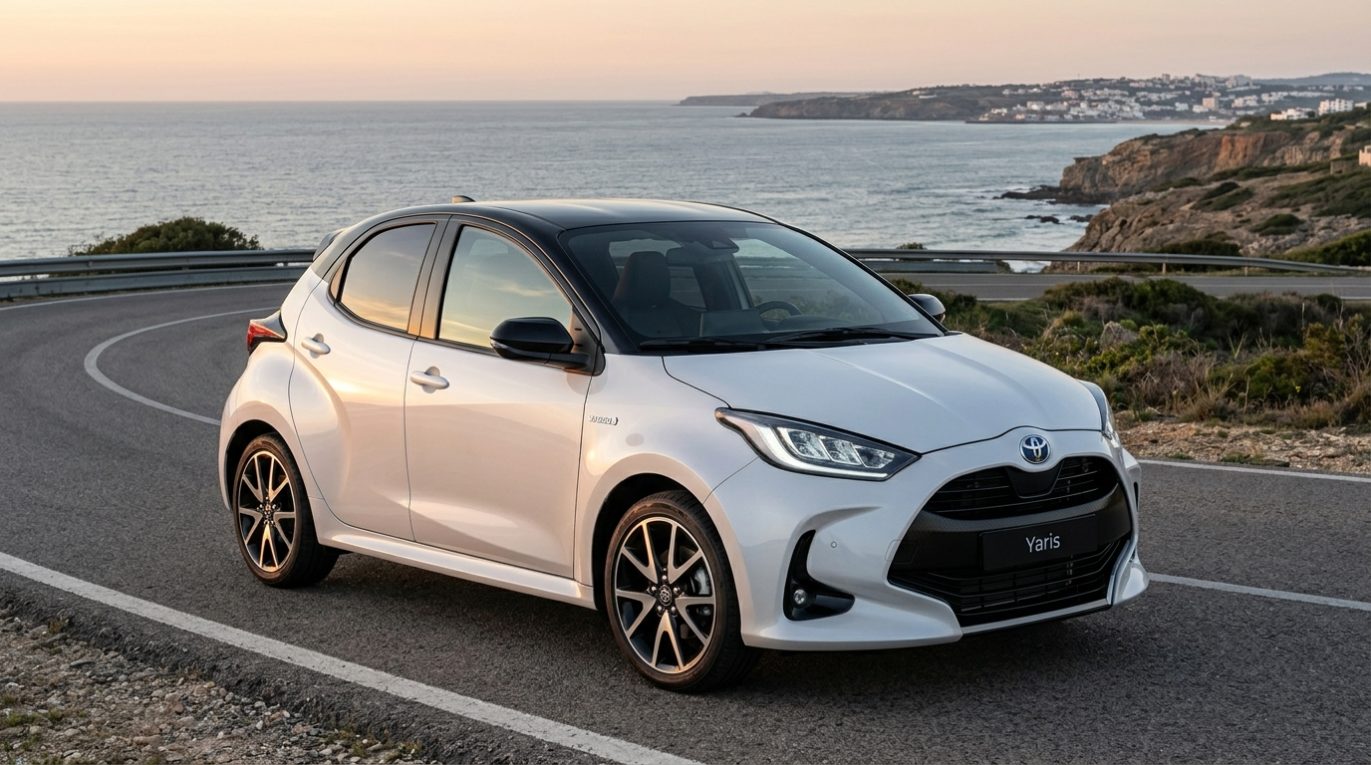
There is a funny thing about the Toyota Yaris. It is one of those cars that rarely gets people excited when they are standing at a dealership, but it makes a lot more sense once you start thinking about what you actually need from a car.
In Kenya, the name Yaris is also a little confusing because many people still associate the car with the Toyota Vitz. The Yaris name has been used in different markets for years, while Japanese-market cars were commonly sold as the Vitz. The newer Yaris is therefore not an entirely unfamiliar car to Kenyan buyers. It is part of a nameplate that has long occupied the small, economical Toyota hatchback space.
Today, 2019 and 2020 Yaris units are already appearing regularly in Kenya, including 1.0-litre and 1.5-litre versions. Current listings show 2019 units roughly around KSh 1.4 million to KSh 2 million depending on engine, specification, mileage and condition. So, what is the Yaris actually like to live with in Kenya?
Why Buy It?
The first thing you notice is its size. The Yaris is small enough to make Nairobi driving relatively painless. Parking in tight spaces is easier, navigating crowded streets requires less effort and the car does not feel unnecessarily large for someone whose daily routine is mostly urban.
That is one of the strongest reasons to buy one. It is not trying to be an SUV, a family wagon or a long-distance cruiser. It is a compact hatchback designed to get you around efficiently. And for many Kenyan drivers, that is exactly what they need.
The 1.0-litre engine is particularly attractive to buyers who spend most of their time in town. Toyota’s 1KR-FE three-cylinder engine produces around 69 hp in the Japanese-market Yaris, and the small engine is designed around economy rather than performance. In normal urban driving, that can be perfectly adequate.
But there is a catch. A small engine feels very different when the car is fully loaded, the air conditioning is running and you are climbing a steep hill. If you regularly travel upcountry with several passengers or spend a lot of time on hilly roads, the 1.0-litre can feel strained.
This is where the 1.5-litre becomes more interesting. It gives the Yaris considerably more breathing room when accelerating, overtaking or climbing. It is still a small car, but you do not have to work the engine as hard to maintain speed. For someone who wants one car to handle both Nairobi commuting and regular highway trips, the larger engine is worth considering.
The Yaris is also easy to drive. The automatic transmission makes it particularly suitable for stop-and-go traffic, and the car’s compact dimensions mean you do not have to think too much about where its corners are. It feels more like a tool for getting around than a vehicle that demands your attention. That simplicity is part of the appeal.
But the Yaris does have limitations. The rear seat is not particularly generous, and while four adults can travel reasonably comfortably, carrying five adults over a long distance is not where the car feels most at home. The boot is also modest compared with something like a Honda Fit, which has a particularly clever interior layout.
If you are regularly carrying luggage, large shopping loads or work equipment, the Yaris may begin to feel small. For a single driver, young couple or small family, however, the size can actually be an advantage.
Why People Like It
Fuel consumption is one reason the car attracts buyers. The 1.0-litre engine can be economical when driven sensibly, while the 1.5-litre gives you more performance without turning the Yaris into a thirsty car. Actual consumption will depend heavily on traffic, driving style, tyre pressure, load and the mechanical condition of the vehicle, so advertised figures should not be treated as guarantees.
In Nairobi traffic, no small car is going to deliver its best theoretical economy. But compared with larger engines and heavier vehicles, the Yaris has a natural advantage simply because there is less car to move around.
The same principle applies to maintenance. The Yaris does not have an especially complicated conventional powertrain, and Toyota’s widespread presence in Kenya means finding mechanics familiar with the brand is generally straightforward.
That does not mean every Yaris is cheap to maintain. A used car is only as good as the particular example you buy. A poorly maintained Yaris can still develop suspension, transmission, cooling or electrical problems. The fact that the Toyota badge is on the bonnet should never replace an inspection.
Pay particular attention to the transmission on a used example. The CVT should feel smooth and predictable. Unusual whining, juddering, hesitation or poor response deserves investigation before you buy.
The suspension is also worth checking carefully, particularly if the car has spent years on Nairobi’s potholes and speed bumps. Listen for knocks and inspect the tyres for uneven wear.
And then there is ground clearance. The Yaris is not a high-riding car. Depending on the specification and wheel setup, Japanese-market versions have relatively modest ground clearance, so high speed bumps and badly damaged roads require some care. Toyota’s Japanese specifications list clearance figures around the mid-100-mm range depending on version.
This is not a major problem if your daily routes are reasonably maintained. But if you regularly drive rough rural roads, badly damaged estate roads or areas with aggressive speed bumps, a higher vehicle may suit you better.
Inside, the Yaris is functional rather than luxurious. You get the things most people actually need: air conditioning, basic infotainment and the usual convenience features depending on the grade. Higher-spec cars can have additional safety and driver-assistance equipment.
Where the Yaris makes its case is in the overall ownership experience. It is small, economical, easy to drive and backed by a brand with a huge support network in Kenya. That also helps when it is time to sell.
The Yaris has a recognisable name, although Kenyan buyers still often search for and refer to similar cars under the Vitz name. That familiarity can help compared with a less common hatchback, although resale value will still depend heavily on condition, mileage, year and specification.
And this is where the Yaris becomes an interesting alternative to the cars it competes with. A Mazda Demio may appeal more to someone who wants sharper styling and a more engaging drive. A Honda Fit offers excellent interior flexibility and cargo space. The Yaris takes a different route. It is the car you buy when you want the ownership experience to be relatively straightforward.
For a Kenyan buyer looking for a compact daily driver, the Toyota Yaris makes a lot of sense. The main question is which one. If your driving is mostly within Nairobi or another urban area and you prioritise economy, the 1.0-litre deserves consideration. If you regularly carry passengers, travel upcountry or want more confidence on hills and highways, the 1.5-litre is the more versatile choice.