

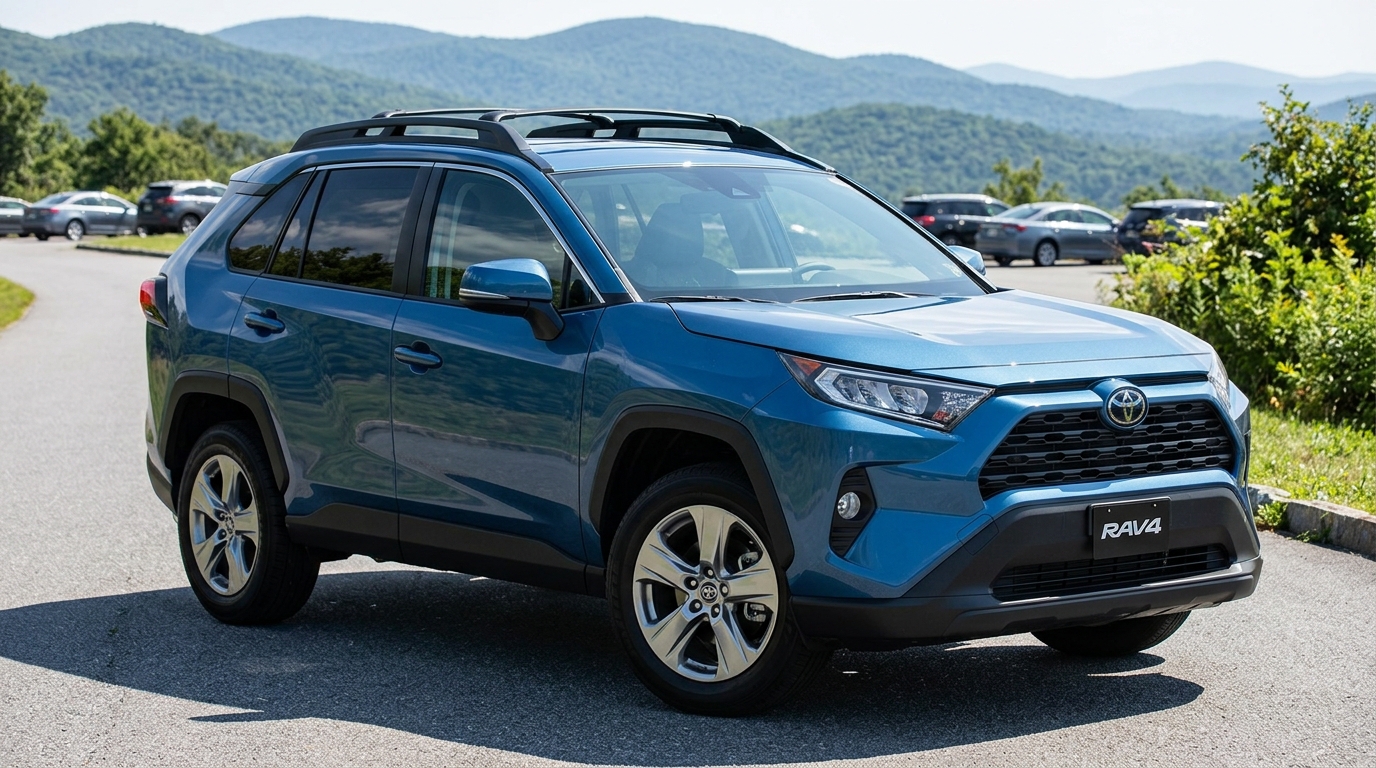
For a long time, the Toyota RAV4 was the choice in the SUV market: reliable, practical and easy to recommend, but rarely the car everyone was talking about. The fifth-generation RAV4 changed that. Introduced internationally for the 2019 model year, the XA50 brought a much tougher design, a more sophisticated cabin and better road manners, while retaining the practicality that made the RAV4 popular in the first place.
That is why the newer shape has become increasingly visible in Kenya. The first 2019 models now fall within the country’s current used-import window, making them accessible to buyers who want a relatively modern Toyota SUV without going all the way up to a Prado. But with prices varying significantly between different specifications, is the fifth-generation RAV4 actually worth the money?
A Completely Different RAV4
The first thing you’ll notice is the design. The XA50 looks considerably more muscular than the previous generation, with a higher bonnet, prominent wheel arches and a wider, more planted stance. The Japanese-market model is about 4.6 metres long and 1.855 metres wide, with roughly 200 mm of ground clearance depending on specification.
That combination works well for Kenya. It is large enough to feel like a proper family SUV but isn’t so enormous that it becomes awkward in Nairobi. The ground clearance is also useful on speed bumps, rough estate roads and less-than-perfect sections of highway. It is not a Prado, and anyone expecting serious off-road capability is looking at the wrong vehicle, but for ordinary Kenyan driving the RAV4 has a very useful balance.
The Engine You Choose Matters
The fifth-generation RAV4 comes with different powertrains depending on the market. Japanese-market petrol versions use Toyota’s 2.0-litre M20A-FKS Dynamic Force engine, producing 171 PS and 207 Nm, while the Japanese hybrid uses a 2.5-litre A25A-FXS engine combined with Toyota’s hybrid system. The Japanese Hybrid G is rated at 20.6 km/L under the WLTC test cycle.

Those figures shouldn’t be interpreted as what you’ll necessarily achieve in Nairobi traffic. Real-world fuel consumption depends on traffic, driving style, air-conditioning, tyres and vehicle condition. The hybrid nevertheless makes a lot of sense for someone who spends hours in stop-start traffic because the electric motors can provide assistance at low speeds and recover energy during braking.
The 2.0-litre petrol version shouldn’t be overlooked, though. If you drive relatively little or mostly travel on open roads, the conventional engine gives you a simpler drivetrain without the additional hybrid components. For many buyers, it may also be the more affordable way into the XA50.
One important warning: don’t buy based on “RAV4 2.5” or “RAV4 Hybrid” alone. Japanese, European and North American versions can have different specifications, so establish exactly where the car came from, which engine it has and what grade you’re buying.
It Is a Very Good Family SUV
The RAV4’s size becomes an advantage once you get inside. The cabin provides useful space for five people, while the boot is large enough for normal family luggage, shopping and weekend trips. The driving position is also one of its strengths: you sit high enough to get a good view of traffic without feeling like you’re operating a massive SUV.
The fifth generation also feels significantly more refined than the older RAV4. Depending on the grade and market, equipment can include features such as touchscreen infotainment, climate control, keyless entry, power seats, panoramic roof and Toyota Safety Sense technology.
But don’t assume every imported RAV4 has the same equipment. A base Japanese-market version and a higher-grade model can be very different cars, so check the actual specification rather than relying on photographs from another vehicle.
How Does It Handle Kenyan Roads?
This is one of the areas where Toyota made a noticeable improvement. The fifth-generation RAV4 uses Toyota’s TNGA-K platform, and it feels more stable and composed at highway speeds than the previous model. The suspension combines MacPherson struts at the front with a double-wishbone arrangement at the rear, contributing to a more controlled ride and handling balance.
It is comfortable without feeling excessively soft, and that makes it equally useful around town and on longer journeys. Wheel and tyre specification does matter, however. Some higher-grade versions with larger wheels and lower-profile tyres can feel less forgiving over badly damaged roads.
Four-wheel drive is available on certain versions, including Toyota’s E-Four system on Japanese hybrid models. That can be useful on muddy or slippery roads, but don’t confuse it with serious off-road equipment. The RAV4 is best thought of as a capable crossover rather than a replacement for a Prado or Hilux.
What About Reliability and Maintenance?
This is probably the easiest part of the RAV4 ownership story for Kenyan buyers. Toyota has an enormous service and parts ecosystem in Kenya, and the RAV4’s popularity means mechanics are familiar with the model. The 2.0-litre petrol version is mechanically straightforward compared with the hybrid, while Toyota’s hybrid technology has a long history globally.
The bigger concern is the condition of the individual imported vehicle. A five-year-old RAV4 with a clean history and proper maintenance can be an excellent purchase. Another with accident damage, neglected servicing or questionable mileage can become very expensive. This is particularly important now that the model has become fashionable and sellers know buyers are willing to pay a premium for the newer shape.
If you’re buying the hybrid, have the battery and hybrid system properly diagnosed. Don’t accept “Toyota hybrids are reliable” as a substitute for an inspection.
Is the Fifth-Generation RAV4 Expensive?
It isn’t a cheap SUV, and that’s part of the reason buyers need to shop carefully. Prices vary considerably according to year, engine, grade, mileage and whether the car is a Japanese, European or North American specification. In Kenya for instance, you can expect to cough Ksh4,000,000 and above for the 2019 model. A 2019 2.0-litre petrol RAV4 and a newer high-grade hybrid should not be treated as equivalent simply because both carry the RAV4 name.
The hybrid can save considerably on fuel for a high-mileage urban driver, but the petrol model can make more financial sense for someone who drives less. Either way, remember that you’re buying a larger SUV, so tyres, insurance and some replacement parts will cost more than they would on an Axio, Vitz or Aqua. The RAV4’s appeal is therefore not that it is cheap to own. It offers a lot of vehicle for what you spend.
Should You Buy One?
If you want a relatively modern Toyota SUV for family use, the fifth-generation RAV4 is one of the strongest options currently available to Kenyan buyers.
The 2.0-litre petrol makes sense if you prefer simplicity and don’t drive huge distances, while the 2.5-litre hybrid is particularly attractive for people who spend a lot of time in Nairobi traffic and can benefit from its lower fuel consumption. If you regularly encounter rough roads, an AWD version can provide useful additional traction.
But I wouldn’t buy one simply because it has become “the car to have.” Check the auction history, verify the mileage, inspect the body for accident repairs, confirm the exact grade and drivetrain, and have the mechanical and hybrid systems properly assessed. With an increasingly popular model, finding a good example is more important than finding the cheapest example.
To sum it up, the fifth-generation Toyota RAV4 has earned much of the attention it is receiving in Kenya. It looks modern, has useful ground clearance, offers genuine family space and drives considerably better than the older generation. The hybrid adds impressive efficiency for urban driving, while the 2.0-litre petrol remains a sensible conventional alternative.
It isn’t a Prado, it isn’t the cheapest Toyota to run and not every imported example is worth the asking price. But as a five-seat family SUV that can handle Nairobi during the week and a long trip upcountry at the weekend, the XA50 gets the balance remarkably right. If you find a clean one at a sensible price, the fifth-generation RAV4 is not just hype. It’s a genuinely good SUV.