

Finding a used car that fits your budget can be exciting. The body looks clean, the interior is tidy, the engine starts without hesitation, and the seller assures you that the vehicle has no problems. At that point, it is easy to become emotionally committed and start thinking about payment. That is also when many costly mistakes are made.
A clean appearance does not always mean a car is mechanically sound. Fresh paint can hide previous accident damage, a recently cleaned engine can conceal oil leaks, and dashboard warning lights can be temporarily cleared before a viewing. Even a smooth test drive may not reveal faults that only appear after the engine warms up or the vehicle is driven at highway speed.
Before paying for any used car in Kenya, inspect both the vehicle and its documents carefully. The goal is not to find a perfect car. Used vehicles naturally show signs of age and wear. The goal is to understand exactly what you are buying and avoid inheriting expensive problems that were not reflected in the price.
Start by checking the vehicle’s identity and ownership details. Ask to see the original logbook information and confirm that the seller is the registered owner or has clear authority to sell the vehicle. Compare the registration number, chassis number, engine details, make, model, and colour with the vehicle in front of you.
The chassis number, also known as the Vehicle Identification Number, should match the details in the ownership records. Depending on the model, it may be found in the engine bay, on the body frame, near the windscreen, or on a manufacturer’s identification plate. Be cautious if identification numbers appear altered, damaged, covered, or difficult to read. A mismatch should be investigated before any money changes hands.
Ownership should also be verified through the official NTSA system rather than relying only on screenshots or printed copies supplied by the seller. Confirm that the vehicle is registered correctly and check whether there are ownership complications that could affect transfer.
If the vehicle is financed, jointly owned, or subject to another legal interest, the transfer process may require additional steps. Do not assume that possession of the car automatically gives the seller unrestricted authority to sell it.
Once the documents are clear, inspect the exterior in daylight. Poor lighting can hide dents, scratches, uneven paintwork, and differences in colour between body panels. Walk around the vehicle slowly and observe how light reflects across the paint. Panels that appear slightly darker, lighter, or unusually smooth may have been repainted.
Repainting is not automatically a reason to reject a car. Many vehicles receive paint repairs after minor scratches or dents. What matters is whether the work was cosmetic or followed a serious collision.
Check the gaps between the bonnet, doors, boot, bumpers, and body panels. Uneven gaps may indicate previous accident repairs or poor panel alignment. Look for overspray on rubber seals, plastic trim, lights, and inside door frames, as this can reveal earlier bodywork.
Open the bonnet and inspect the structural areas around the engine bay. Bent metal, unusual welding, fresh sealant, or inconsistent paint may suggest previous collision damage. The same applies to the boot floor and spare-wheel compartment.
Pay close attention to the tyres. Tyres reveal more about a vehicle than many buyers realise. Check whether all four have adequate tread and inspect the sidewalls for cracks, cuts, bulges, or other damage. Uneven wear may point to poor wheel alignment, worn suspension components, incorrect tyre pressure, or previous accident damage.
If one side of a tyre is significantly more worn than the other, ask why. Replacing tyres may solve the visible problem, but it will not correct a damaged suspension or alignment issue.
Inspect the engine before it is started. A cold start can reveal problems that become less noticeable once the engine warms up. If possible, ask the seller not to start the vehicle before you arrive. Place a hand near the engine to determine whether it has already been running.
Check the engine bay for oil leaks, coolant stains, damaged wiring, loose hoses, and signs of rushed repairs. An engine that has been heavily washed immediately before sale deserves closer attention because cleaning can temporarily remove evidence of leaks.
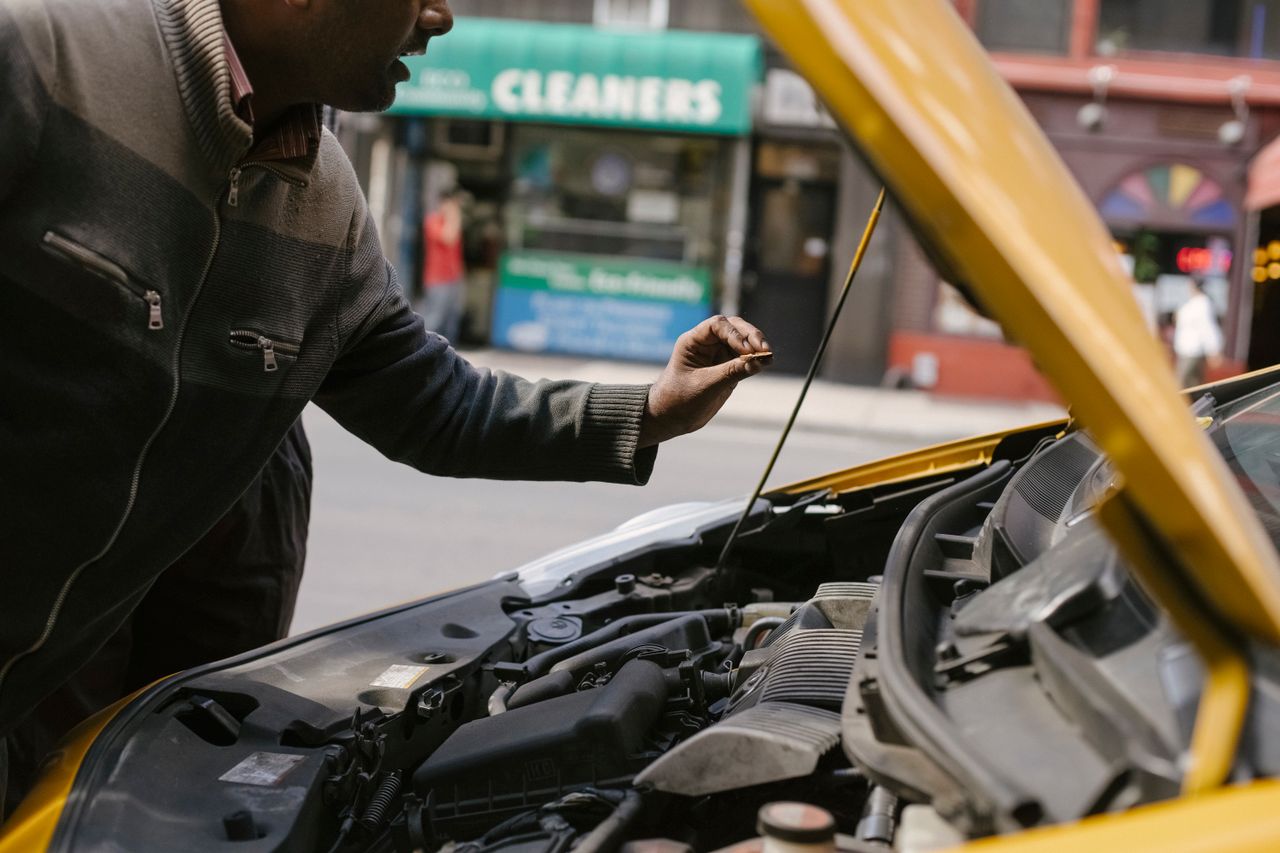
Remove the engine-oil dipstick where appropriate and examine the oil level and condition. Very low oil may suggest poor maintenance or oil consumption. Also inspect the coolant reservoir. Coolant should be at the correct level, and unexplained loss may indicate a leak or cooling-system problem.
When the engine starts, listen carefully. It should settle into a steady idle without excessive shaking, loud knocking, persistent ticking, or unusual metallic sounds. Some engines are naturally noisier than others, particularly diesels, so the assessment should be made by someone familiar with that model.
Observe the exhaust during startup and acceleration. Persistent blue smoke may indicate that the engine is burning oil. Thick black smoke can point to excessive fuel delivery or incomplete combustion, particularly in diesel vehicles. Continuous white smoke after the engine has warmed may require further investigation.
Do not ignore dashboard warning lights. When the ignition is switched on, warning indicators should illuminate briefly as part of the system check and then go off after the engine starts. If important lights do not appear at all, they may have been disabled or concealed.
Warning lights for the engine, airbags, anti-lock braking system, transmission, hybrid system, or electronic stability control should be properly diagnosed. Clearing a fault code does not repair the underlying problem.
Test every electrical feature you can. Check the headlights, brake lights, indicators, hazard lights, reverse lights, horn, wipers, electric windows, mirrors, central locking, air conditioning, infotainment system, reverse camera, parking sensors, and steering-wheel controls.
A failed switch may appear minor, but several electrical faults can indicate wiring problems, water damage, accident repairs, or neglected maintenance.
For hybrid vehicles, insist on a proper battery and hybrid-system assessment. Do not judge battery condition simply because the car starts and drives. A diagnostic scan can provide useful information about battery performance, stored fault codes, and the condition of the hybrid system.
The transmission should also be assessed carefully. For an automatic vehicle, shifting from park into reverse or drive should be smooth and reasonably prompt. Strong jerking, long delays, unusual noises, or warning lights may indicate a problem.
During the test drive, observe how the transmission behaves under gentle and stronger acceleration. Gear changes should be smooth, while continuously variable transmissions should accelerate without excessive shuddering or abnormal noise. A proper test drive should involve more than moving the vehicle around a parking area.
Drive on different road surfaces where possible. Accelerate, brake, turn, and listen for unusual sounds. The vehicle should track straight without pulling strongly to either side. Steering should feel predictable and should not produce excessive vibration or looseness.
Listen for knocking or rattling over bumps, which may indicate worn suspension bushes, stabiliser links, ball joints, shock absorbers, or other components. A single worn part may be inexpensive, but several neglected suspension components can create a substantial repair bill. Test the brakes in a safe area. The vehicle should stop in a controlled manner without pulling to one side, producing strong vibrations, or making grinding noises.
Do not forget the interior. Excessive wear on the steering wheel, pedals, driver’s seat, and frequently used controls may not match an unusually low mileage reading. Interior condition alone cannot prove odometer manipulation, but inconsistencies should encourage further investigation. Check the seat belts, door locks, dashboard controls, air conditioning, and signs of water entry. Damp carpets, musty smells, corrosion under seats, or unusual electrical faults may indicate previous flooding or persistent leaks.
Service history is equally important. A vehicle with documented maintenance may be a safer purchase than one showing lower mileage but no evidence of servicing. Ask for service records, repair invoices, inspection reports, and import documents where available.
For vehicles imported from Japan, request the auction sheet if one exists and verify it independently where possible. The auction grade, recorded mileage, repair history, and condition notes can provide useful information, but buyers should avoid relying on an unverified copy supplied by an interested seller.
Most importantly, arrange an independent pre-purchase inspection. Do not rely entirely on the seller’s mechanic or the assurance that the vehicle was “recently serviced.” Choose a qualified mechanic or inspection service with no financial interest in the sale. A professional inspection should include a diagnostic scan, engine assessment, transmission check, suspension inspection, braking-system review, underbody examination, and evaluation for previous accident repairs. The cost of an inspection is small compared with the price of an engine, transmission, hybrid battery, turbocharger, or major suspension repair.
Finally, avoid paying under pressure. Statements such as “another buyer is coming,” “the price is only valid today,” or “send a deposit so I can reserve it” should not prevent you from completing proper checks. A genuine opportunity should still survive reasonable due diligence.
At Iko Gari, we believe buying with knowledge is cheaper than repairing mistakes. Before making your final decision, you may also find our guide on Most Reliable Used Cars in Kenya According to Mechanics useful. It can help you look beyond appearance and choose a vehicle that continues to make financial sense long after the excitement of buying has passed. Before you pay, inspect. Before you trust, verify. And before you commit, make sure you understand exactly what you are buying.