


There is a common assumption when buying a car: if it does not break down often, it must be cheap to own. That sounds logical, but it is not always true. Some cars can go for years without giving their owners serious engine or transmission problems and still feel surprisingly expensive to keep. The reason is simple. Reliability is only one part of the cost of ownership.
A car can have a dependable engine, start every morning and rarely visit a mechanic for major repairs, yet demand a lot of money from its owner in other ways. Fuel, tyres, insurance, servicing, spare parts, depreciation and even the availability of mechanics can make a seemingly reliable car expensive over several years.
Fuel is usually the easiest cost to notice. A vehicle that uses 12 litres per 100 kilometres may not seem dramatically different from one using 8 litres, but the difference becomes significant if you drive every day. With Nairobi petrol currently above KSh 200 per litre, the fuel bill can quickly overshadow the occasional repair bill.
Imagine two cars that each cover 15,000 kilometres a year. If one averages 8 litres per 100 kilometres and the other 12 litres, the first uses about 1,200 litres annually while the second uses about 1,800 litres. At KSh 214.03 per litre, that is roughly KSh 257,000 versus KSh 385,000 a year before considering changes in fuel prices.
Neither car has to break down for the second one to feel expensive. This is why engine size matters, but not in isolation. A larger engine may offer better performance, a smoother drive and more effortless highway cruising, but if most of your driving is through Nairobi traffic, you may spend much of your time paying for performance you rarely use.

Then there are tyres. They are easy to forget when comparing cars because they are not part of the monthly payment, but eventually every vehicle needs them.
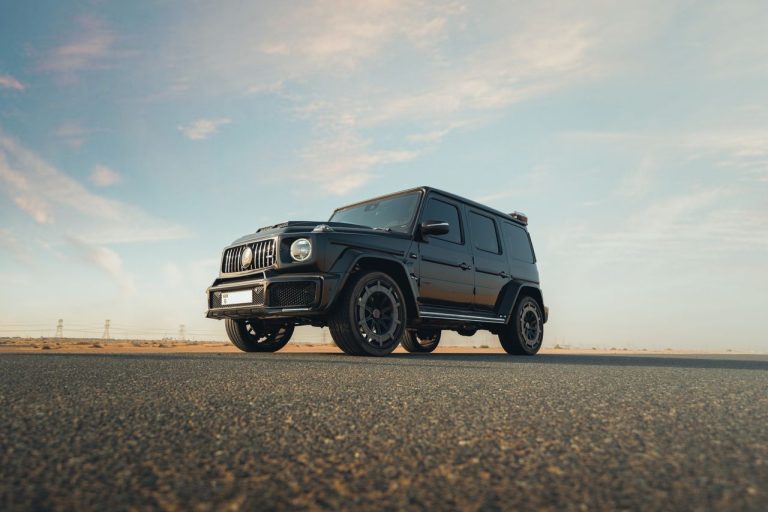
A small hatchback running on relatively narrow 15-inch tyres is operating in a completely different cost bracket from a large SUV on 18 or 19 inch tyres. The larger vehicle may be perfectly reliable, but when four tyres need replacing, the difference can be painful.
The same applies to brakes, suspension components and other consumables. A vehicle designed around larger wheels, heavier components or more sophisticated systems can cost considerably more when routine replacement eventually becomes necessary.
Insurance can add another layer. The cost of comprehensive cover is influenced by the vehicle’s value and the risk associated with it, among other factors. Kenya’s insurance industry has also faced rising repair costs because spare parts for some models can be expensive or difficult to source.
Industry reporting has previously highlighted particularly high parts costs for some Honda, Mazda and German vehicles compared with more commonly supported Toyota and Nissan models. This creates an interesting situation where two cars with similar reliability records can have very different ownership experiences.
Suppose Car A rarely breaks down but needs expensive parts when something eventually wears out. Car B may have a similar reliability record but uses parts that are widely available in Nairobi and can be sourced from several suppliers. Even if both cars spend roughly the same amount of time at the mechanic, Car A can still cost considerably more over its lifetime. Parts availability is therefore one of the most overlooked factors when buying a used car in Kenya.
A car can be mechanically excellent and still be frustrating to own if every unusual component has to be imported or searched for through specialist dealers. This becomes particularly noticeable with less common models, newer variants and vehicles whose specifications differ significantly from those widely sold in Kenya.
It is one reason why popularity matters in the Kenyan used-car market. A common car does not automatically make it a better car, but the size of its support network can make ownership easier. More cars on the road usually mean more mechanics familiar with them, more parts in the market and more people who have already encountered the same problems.
Then there is servicing. Two cars can both require routine servicing every 10,000 kilometres, yet the amount spent at each service can be completely different. Oil capacity, filters, spark plugs, transmission fluids and other service items vary from one model to another.
A sophisticated car may also require specialised diagnostic equipment or technicians who understand its electronic systems. That does not mean it is unreliable. It simply means that when it needs attention, the person working on it may need more specialised knowledge.
And sometimes the biggest cost is not a repair at all. It is depreciation. A car that loses value quickly can cost its owner more than a mechanically troublesome car that holds its value well. If you buy a vehicle for KSh 3 million and later sell it for KSh 1.8 million, the KSh 1.2 million difference is a real cost of ownership even if the car never suffers a major mechanical failure.
This is particularly important when comparing less common cars with models that have strong demand in Kenya. A car may be attractive, comfortable and reliable, but if buyers become harder to find when you want to sell, you may have to accept a lower price or wait longer.
That is why sometimes a question like “Is this car reliable?” is never enough. Look beyond that and ask “What will this car cost me to live with?” That means looking beyond the engine and asking how much fuel it consumes in the kind of driving you actually do.
Find out the price of a set of tyres. Check the cost and availability of common service parts. Ask mechanics whether they regularly work on the model. Find out whether major components are readily available in Kenya. Consider insurance. And, before buying a used car, look at what similar units are selling for and how easily they move in the local market.
This becomes especially important when buying a car that looks like a bargain simply because its purchase price is attractive. A KSh 1.8 million car that costs heavily in fuel, tyres, insurance and specialist maintenance can eventually be more expensive to own than a KSh 2.1 million car with lower running costs and stronger resale value.
For Kenyan buyers, the sweet spot is often a car whose reliability is matched by reasonable fuel consumption, affordable consumables, readily available parts, a strong service network and healthy resale demand. That combination is what makes a car feel affordable long after the excitement of buying it has disappeared.
Because a car does not have to break down to become expensive. Sometimes it simply costs a little too much every time you drive it, service it, insure it, replace a tyre or eventually try to sell it.