

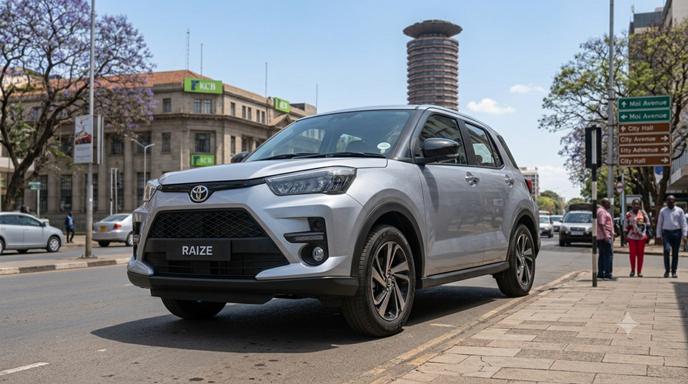
The Toyota Raize has become increasingly visible on Kenyan roads, and it is easy to understand why. It offers the raised driving position and modern appearance many buyers want from an SUV while remaining compact enough for Nairobi traffic and relatively economical to run.
For motorists upgrading from cars such as the Toyota Vitz, Mazda Demio, Honda Fit, or Toyota Aqua, the Raize can feel like a natural next step. It provides better ground clearance, easier entry and exit, a more commanding view of the road, and the appearance of a larger vehicle without the fuel consumption or ownership costs associated with traditional SUVs.
However, the Raize is still a compact crossover. Buyers should understand both its strengths and limitations before deciding whether it suits their needs.
Introduced in Japan in 2019, the Toyota Raize was developed as a small urban SUV. It is closely related to the Daihatsu Rocky and was designed to provide SUV practicality in a compact body. Despite measuring less than four metres in length, it uses its interior space efficiently and feels larger inside than its exterior dimensions suggest.
This compact size is one of its greatest advantages in Kenya. The Raize is easy to manoeuvre through congested streets, fits comfortably into tight parking spaces, and remains manageable for drivers moving from smaller hatchbacks. Its elevated seating position also improves forward visibility without making the vehicle feel bulky.
Ground clearance is another reason many Kenyan buyers are attracted to it. At approximately 185 millimetres, depending on the version, the Raize offers more clearance than many ordinary hatchbacks and sedans. This makes it better suited to speed bumps, uneven estate roads, rough parking areas, and moderately poor road surfaces.
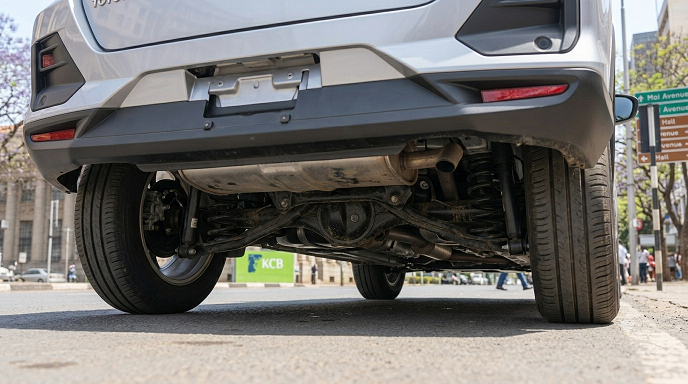
That does not make it an off-road vehicle. Although some versions are available with four-wheel drive, the Raize is primarily designed for urban roads, highways, and light rural use. Buyers who regularly travel through deep mud, rocky terrain, or severely damaged roads may be better served by a larger and more capable SUV.
The Raize is available with different powertrains depending on the model year and market.
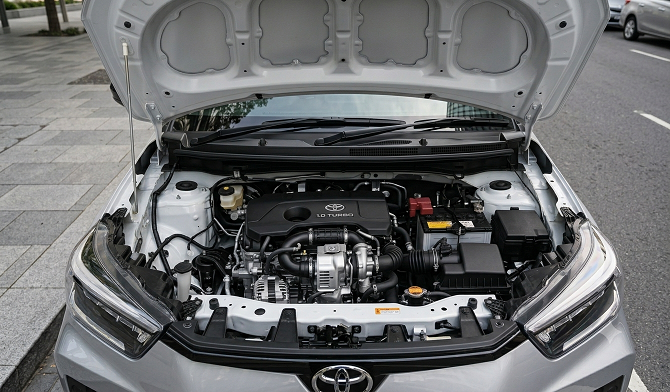
Many early Japanese-market models use a 1.0-litre three-cylinder turbocharged petrol engine. The turbocharger helps the small engine produce stronger acceleration than its size might suggest, making the vehicle responsive during city driving and reasonably capable on the highway.
Later versions are also available with a naturally aspirated 1.2-litre petrol engine. This engine is mechanically simpler because it does not use a turbocharger, although performance is more modest. Hybrid versions are available in some markets and use a 1.2-litre petrol engine as part of an electrified system designed to improve fuel efficiency.
The best option depends on the buyer’s priorities. The 1.0-litre turbo offers stronger performance, while the naturally aspirated 1.2-litre may appeal to buyers who prefer simpler engine technology. The hybrid is attractive for motorists whose priority is lower fuel consumption, particularly in urban traffic.
Fuel economy is one of the Raize’s strongest selling points.
Actual consumption varies depending on the engine, traffic, road conditions, driving style, vehicle load, and maintenance. In normal use, many petrol-powered Raize owners can expect fuel economy in the mid-to-high teens in kilometres per litre, while careful highway driving may produce better results. Hybrid versions can be more economical, especially in stop-and-go urban traffic.
Buyers should treat unusually high fuel economy claims with caution. Official test figures are measured under controlled conditions and may not reflect everyday driving in Nairobi traffic, hilly areas, or heavily loaded vehicles.
On the road, the Raize feels light and easy to drive. Steering is responsive, visibility is good, and the compact dimensions make changing lanes and navigating busy streets relatively simple. The raised seating position gives drivers some of the confidence associated with larger SUVs without sacrificing manoeuvrability.
The ride is generally comfortable on good roads, although the short wheelbase means sharp bumps and rough surfaces can be felt more clearly than they would in a larger SUV. At higher speeds, the Raize is stable enough for normal highway travel, but buyers should not expect the quietness or planted feel of heavier vehicles such as the Toyota Harrier, RAV4, or Land Cruiser Prado.
Inside, Toyota has made good use of the available space.
The front seats provide adequate room for most adults, while rear-seat space is reasonable for a vehicle of this size. Four adults can travel comfortably, although carrying five adults over long distances may feel tight. The boot is practical for shopping, everyday luggage, and small-family use, but buyers who regularly carry bulky cargo may prefer a larger vehicle.
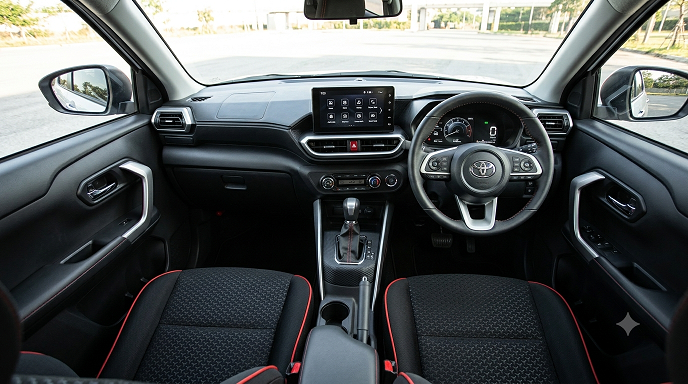
Equipment varies considerably by trim level. Depending on the version, features may include push-button start, automatic climate control, a touchscreen infotainment system, a reverse camera, alloy wheels, steering-mounted controls, and driver-assistance technologies.
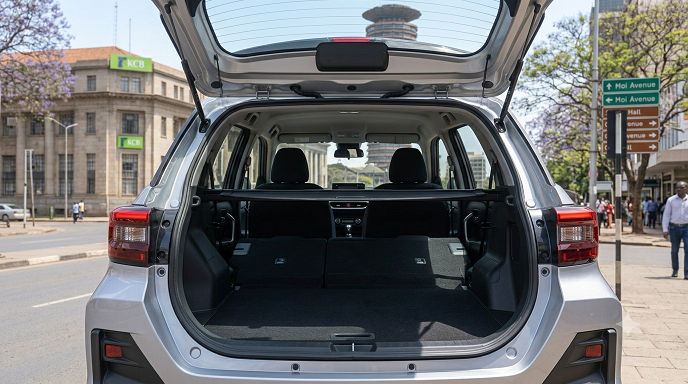
Imported vehicles should be evaluated individually rather than assuming every Raize has the same equipment. Some features may also be designed around the Japanese market and may require adjustment or replacement for convenient use in Kenya.
Safety equipment also depends on the model and trim. Available features may include autonomous emergency braking, lane-departure warning, parking sensors, and other driver-assistance systems. These technologies can improve safety, but they do not replace attentive driving and proper vehicle maintenance.
Reliability is likely to be an important consideration for Kenyan buyers.
The Raize is still relatively new compared with long-established models such as the Toyota Axio, Fielder, Vitz, or RAV4, so Kenya does not yet have the same depth of long-term ownership experience across very high mileages. However, the vehicle uses powertrains and technology developed within the Toyota and Daihatsu group, and it has generally built a positive reputation in markets where it is sold.
Routine maintenance should be manageable, but the 1.0-litre turbo engine requires proper care. Correct engine oil, timely servicing, clean filters, and attention to cooling are important for the long-term health of any turbocharged engine. Delayed oil changes or poor-quality lubricants can shorten the life of turbocharger components.
Spare parts availability is improving as more Raize units enter Kenya, although parts are not yet as widely available as those for older Toyota models. Routine service items should be relatively easy to obtain, but certain body panels, electronic components, or model-specific parts may cost more or take longer to source.
Before buying a used Toyota Raize, a professional inspection remains essential.
The inspection should cover the engine, transmission, suspension, braking system, tyres, electronics, safety systems, and evidence of previous accident repairs. Buyers considering the turbocharged version should also check for unusual engine noises, warning lights, poor acceleration, smoke, oil leaks, and signs of neglected servicing.
For imported units, verify the auction sheet where possible and compare the recorded mileage with the vehicle’s general condition. A clean interior and polished exterior should never replace proper mechanical inspection.
The Toyota Raize makes the most sense for urban motorists, small families, young professionals, and buyers who want the appearance and driving position of an SUV without moving into the higher fuel, insurance, and maintenance costs of a larger vehicle.
It may be less suitable for buyers who regularly carry many passengers, transport large amounts of luggage, tow heavy loads, or drive through demanding off-road conditions. In those situations, a larger crossover or SUV may provide better long-term value.
Ultimately, the Toyota Raize succeeds because it understands what many modern buyers want. It is compact without feeling impractical, economical without looking basic, and elevated without becoming difficult to drive in the city.
It is not a miniature Land Cruiser, nor should it be judged as one. It is an urban crossover designed to make everyday driving easier while offering more ground clearance and versatility than a conventional hatchback.
For the right buyer, that balance makes the Toyota Raize one of the most appealing compact SUVs currently entering Kenya’s used car market.
At Iko Gari, our goal is to help Kenyan motorists look beyond attractive styling and understand how a vehicle fits into everyday ownership. Before making your decision, consider not only the purchase price but also fuel consumption, maintenance, insurance, spare-parts availability, and how you intend to use the vehicle.